Kuratorische Kontaktzonen
- 01.10.2026 Das Sediment von BitterfeldKuratorische KontaktzonenOSTEN FESTIVAL & Bitterfeld-Wolfen (Wolfen Nord)
- 25.07.2026 Der FasanKuratorische KontaktzonenInternationales Kunstzentrum Petersberg (IKZP) & Das Bedürfnis
Das IKZP ist die fünfte Station einer Recherche zu insgesamt acht Kunsträumen, Kunstvereinen und Initiativen in Ost- und Westdeutschland, die den Dialogfeldern und künstlerischen Residenzen 2027 vorausgeht.
Die Orte verbindet, dass sie in Gemeinden und Regionen arbeiten, die auf unterschiedliche Weise von Transformationsprozessen geprägt sind. Im Zentrum steht der Austausch darüber, wie sie auf gesellschaftliche, räumliche und strukturelle Veränderungen reagieren und welche Strategien sie dafür entwickeln.
Der Fasan lebt hauptsächlich am Boden und kann nur kurze Strecken fliegen. Der Fasan baut sein Nest am Boden.
Auf einem Grundstück in Ostrau, einem kleinen Ortsteil von Petersberg, etwa 25 Kilometer nördlich von Halle (Saale), befand sich in den 1970er Jahren ein großer Obstgarten mit einer Futterstelle für eine Schar Fasane. Eines Tages wich die Futterstelle zugunsten eines Gewächshauses. Kurz darauf wurde ein Doppelwohnhaus errichtet, in dem ein Mann Einzug hielt. Dieser war in der Region kein Unbekannter, sondern als Objektkommandant beschäftigt und die Ortschaft wurde kurzum zur “operativen Schwerpunktgemeinde” kategorisiert.
In einer Gemeinde mit 1500 Einwohner:innen lässt sich nichts kaschieren. Schon gar nicht, wenn der Boden über Jahre gegraben und ausgehöhlt wird. Die Neubauten waren eine Architektur der Tarnung, die davon profitierte, dass die Anwohner:innen wussten, nicht genau hinsehen zu sollen. Allerspätestens bei einer Informationsveranstaltung an einer Kreisvolkshochschule im Jahr 2013 erfuhren die Bewohner:innen der Region mit Gewissheit, dass ihre Umgebung als einer von mehreren strategischen Standorten auserkoren worden war und eine Ausweichführungsstelle für bis zu 100 Mitarbeitende der Bezirksverwaltung für Staatssicherheit Halle entstand. Der Bunker mit dem Decknamen „Fasan“ war endgültig enttarnt: das MfS baute sein Nest unter dem Boden.
Der Ernstfall trat nie ein, die unterirdische Festung war über Jahrzehnte im Stand-By-Modus. Nach 1990 kam der Bunkerkomplex in den Besitz des Bundesvermögensamtes, bis er 2022 schließlich an eine Eigentümer:innengesellschaft verkauft wurde.
Konstante 16 Grad
Es ist nicht so, als wäre nichts gewesen in den Jahren zwischen 1990 und der Gründung des Internationalen Kunstzentrum Petersberg (IKZP) 2023, das private Ausstellungen und Veranstaltungen in diesem ehemaligen DDR-Bunkerkomplex veranstaltet. Es muss Raves gegeben haben, das zeigen die Spuren, als das Grundstück und die unterirdischen Gänge erschlossen wurden. Teils waren die Zugänge zugemauert worden und mussten erst abgetragen werden. Inventar wurde peu à peu herausgenommen. Linoleumböden, Feldbetten usw. waren in Teilen noch vorhanden. Einige der Objekte finden sich nun in ortsspezifischen, künstlerischen Arbeiten wieder, die im Bunker gezeigt werden.
Mit konstanten 16 Grad und einer Architektur, die so wenig Spielraum zulässt, aber gleichzeitig die Vorstellungskraft ins Unermessliche treibt, ist der Bunker ein Ort, dem man sich über eine imaginäre Rekonstruktion annähern muss. In der künstlerischen Auseinandersetzung ist das ein Versuch zu verstehen, welche historischen und politischen Spuren und Einschreibungen in den Räumen fortbestehen. Auch die Klasse Blank für Installation und Raum der Hochschule für Grafik und Buchkunst Leipzig (HGB) nutzte den Bunker als Ausstellungsort, um ihn als außergewöhnliches Ausstellungsformat zu testen.
Hinzu wurde er digital rekonstruiert. Die Gruppe von Künstler:innen, die sich dem Bunker angenommen hat, widmet sich nicht allein der materiellen Substanz, sondern übersetzt den Ort in begehbare, digitale Bildwelten. Aus einer Nachbildung, die über VR zugänglich ist, entstand ein Zusammenschluss von Arbeiten unter dem Titel Ruinen des Lichts, die im Sommer 2026 im Bedürfnis e.V. Halle gezeigt wurden. Das Projekt ermöglicht es, den Ort neu zu interpretieren, auch wenn die architektonische Strenge allgegenwärtig ist.
Der Künstler Malte Taffner beispielsweise verbindet das Unterirdische mit dem Oberirdischen und spielt mit dem Geschlossenen als fragiles System. Durch das Sichtbarmachen des Eindringens von Flora bricht er mit der Vorstellung von Abschirmung und stellt die Frage, wovor eigentlich geschützt werden sollte. Die Arbeit von Yannick Harters Lord-Vessel nähert sich der Architektur über die Ästhetik und Logik von Computerspielen. Die Räume werden in eine labyrinthartige Struktur überführt und somit die Gegenpole Orientierung und Kontrollverlust gegenübergestellt. Auch Fabian Lehmanns Machina Motus lässt sich als Auseinandersetzung mit dem Verhältnis von Körper, Kontrolle und künstlicher Umgebung lesen. Die klassische Ästhetik des Discobolus – der antiken Darstellung eines Diskuswerfers – wird mit der präzisen Bewegung von Roboterarmen konfrontiert. David Schröders Sockel 3.0 geht schließlich von einem ganz konkreten materiellen Detail des Ortes aus: dem alten Linoleumboden des Bunkers. Das Material ist ein Relikt einer Zeit und eines Systems, und somit Träger von Erinnerungen an einen Staat, den es nicht mehr gibt. Bei Lennard Beckers Arbeit loosing steht wiederum das Bewahren eines Fundstücks im Mittelpunkt. Becker rettete eine gefundene Skulptur vom Ostfriedhof in Leipzig vor der Entsorgung, reinigte sie und goss sie anschließend in Zinn. Auch hier geht es um die Frage, was wird, wenn ursprüngliche Zusammenhänge verloren gehen und wie künstlerische Arbeit Rekonstruktion und Bewahrung vermitteln kann.
Den Initiator:innen des IKZP geht es bei der Aktivierung des Ortes weniger um den Bunker selbst als um die Öffnung eines unterirdischen Systems, das der absoluten Isolation gewidmet war. Darin liegt die komplette Gegenwende. Auch wenn unterirdisch gezeigt wird, behandeln die Ausstellungen, was sich oberirdisch tut und damit nicht zuletzt die Gegenwart, die ländliche Umgebung und ihre Veränderungen.
Konstante 40%
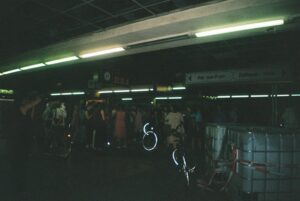
Und vor allem, was die unmittelbare Zukunft bringt. So kurz vor den Wahlen in Sachsen-Anhalt, in denen sich die politische Stimmung zunehmend gegen eine offene Kunst- und Kulturarbeit richtet und sich rückwärtsgewandt in Richtung Kontrolle, Selbstjustiz, Isolation und Abgrenzung entwickelt, steht die von dem Künstler Carsten Saeger initiierte Radtour nach Ostrau gerade deshalb im Zeichen der Begegnung von halleschen Kunst- und Kulturschaffenden, Kunstvereinen und Bewohner:innen der Region.
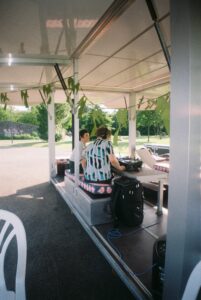
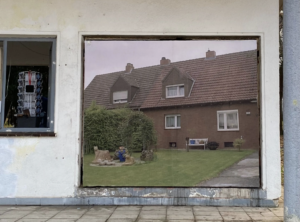
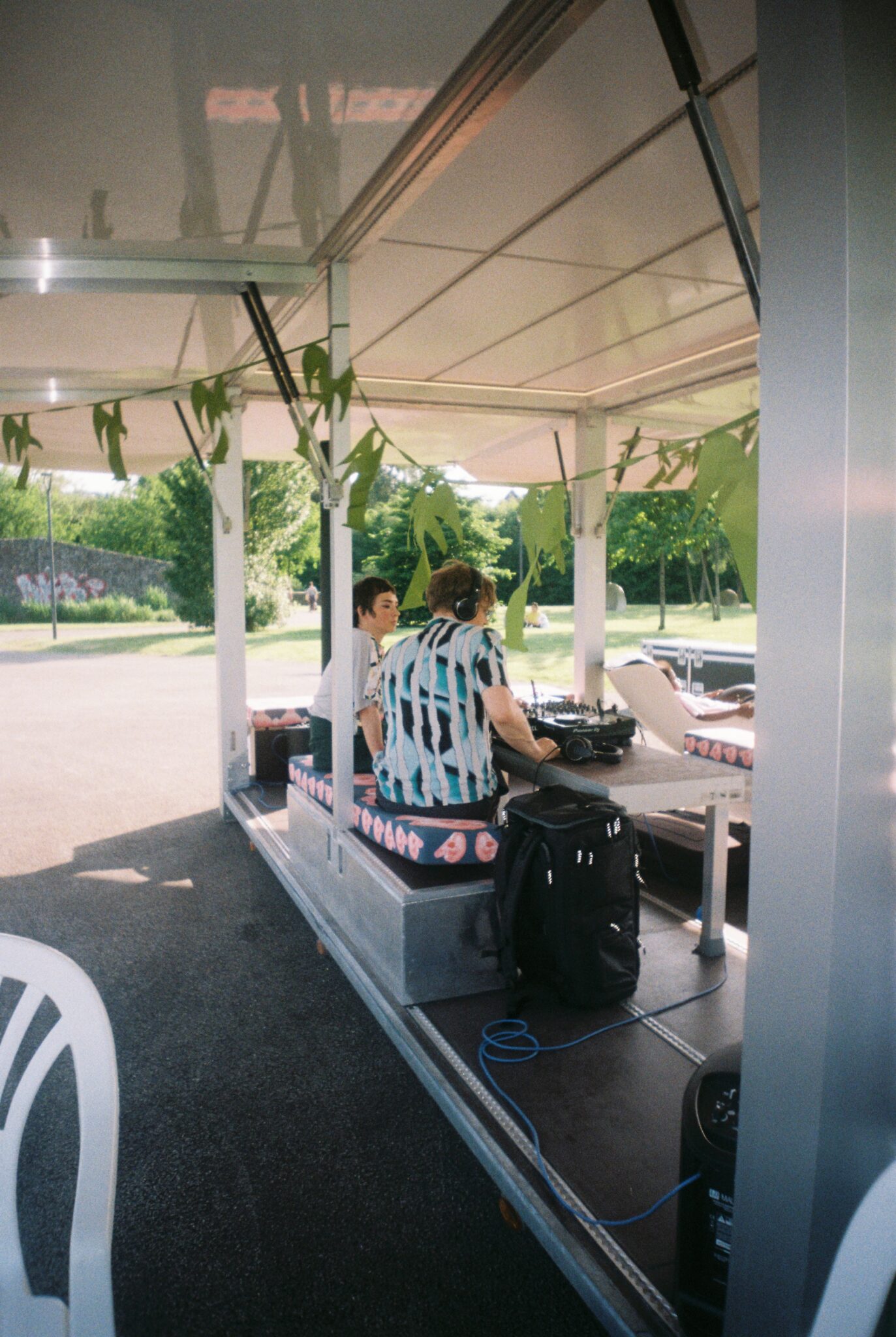
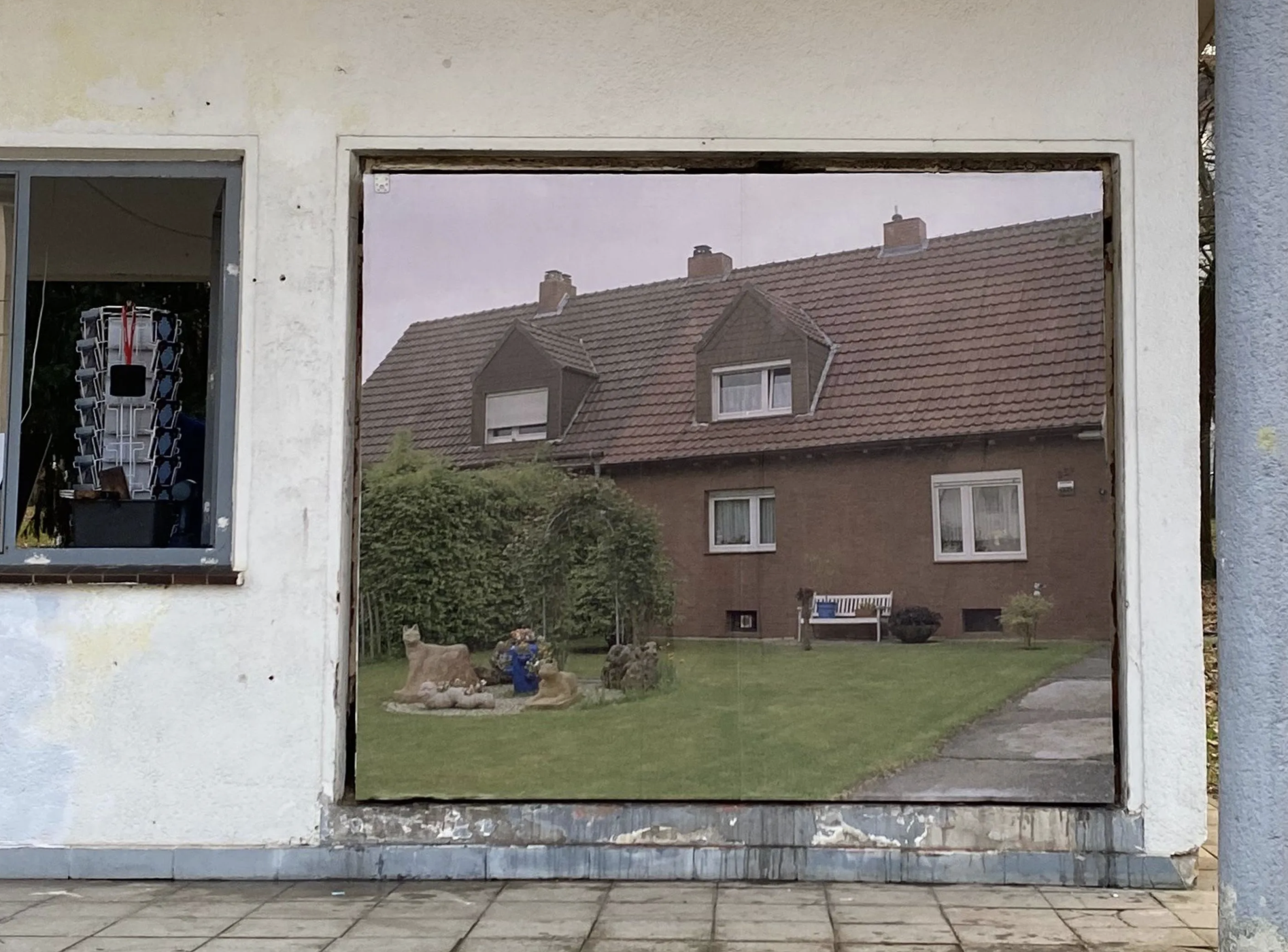
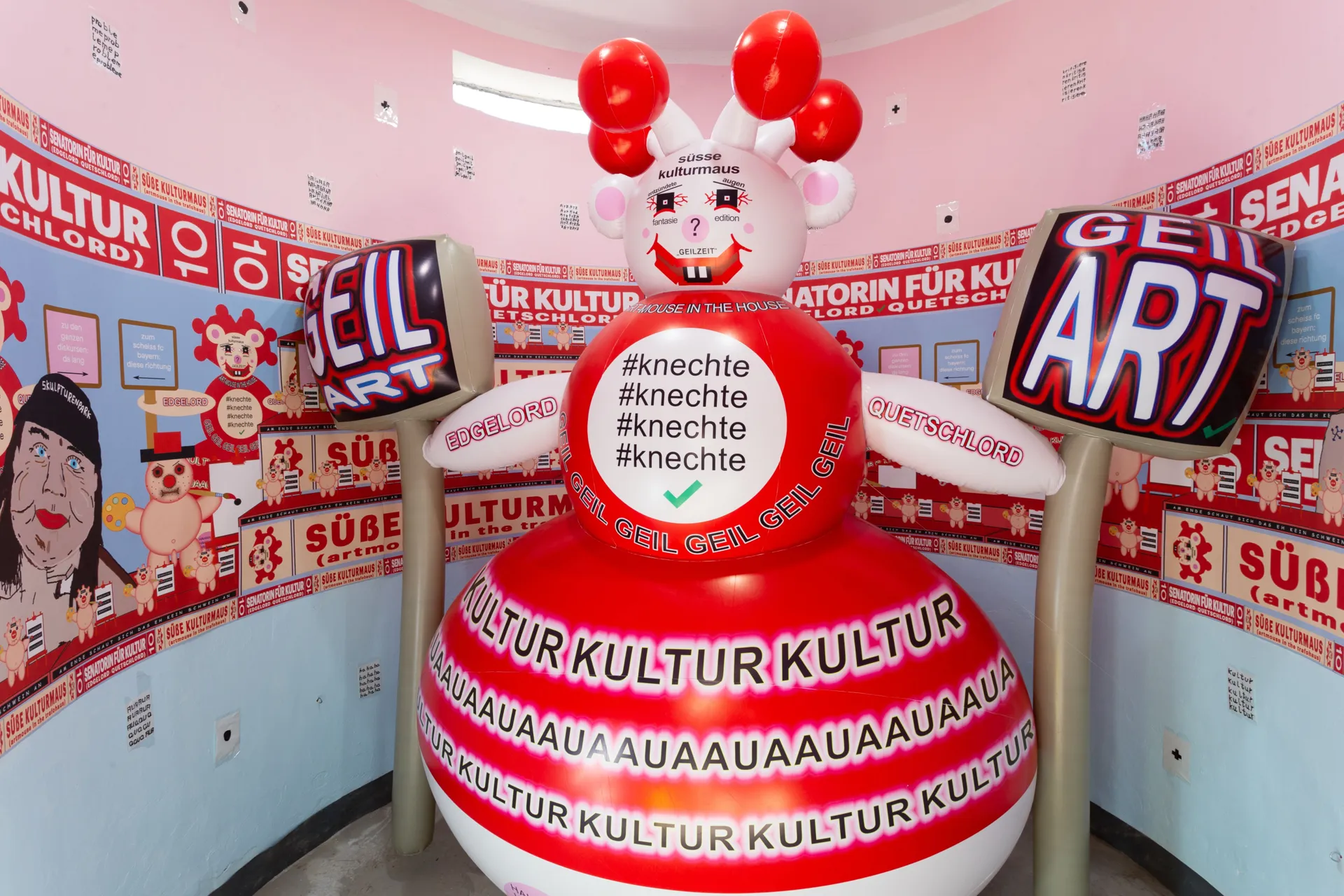
Ausgehend von Das Bedürfnis, einer ehemaligen Bedürfnisanstalt, die mit ihren 13m² ebenso zu einem Ausstellungsraum umgewidmet wurde, spannt sich die Tour von Stadt zu Land durch die Peripherie. Es ist eine Möglichkeit des Austauschs über Transformation, sich wandelnde Alltagsökologien, aber auch über die Wahlen und die damit einhergehende Bedrohung des gesellschaftlichen Zusammenhalts verstanden.
Mit dem Workshopformat Free for All wurde die Idee des Zusammenkommens in Ostrau für ein Wochenende lang fortgeführt. Eigene (künstlerische) Beiträge konnten mitgebracht, auf dem Gelände des IKZP gezeigt oder in eigene Formate überführt werden. Entscheidend war dabei nicht die Vorgabe eines fertigen Programms, sondern die Aktivierung eines Raumes, in dem etwas entstehen konnte: durch Anwesenheit, durch das Zeigen und Teilen.
Das Zusammenkommen in Ostrau war insofern auch eine konkrete Frage danach, was Kunst und Kultur angesichts dieser unmittelbaren politischen Zukunft leisten können. Nicht als Gegenentwurf zur Politik und nicht als Behauptung, Kunst könne gesellschaftliche Verhältnisse allein verändern, sondern als Praxis, die Verbindungen herstellt, Öffentlichkeit organisiert und Räume zugänglich hält. Auch wenn ein Bunker die radikalste architektonische Form des Rückzugs ist, Innen und Außen trennt und Zugang kontrolliert, setzte die Radtour dieser Logik der Abschottung eine Bewegung entgegen.
Gerade dort, wo Räume zu schließen oder sich gesellschaftlich zu spalten drohen, wo die Kontrolle der Kunstfreiheit zunimmt und Institutionen sich gegen die Außenwelt abzuschirmen versuchen, wird ihre Öffnung zu einer politischen und kulturellen Praxis.
www.ikzp.online
https://das-beduerfnis.de/ - 17.07.2026 Second pubertyKuratorische KontaktzonenNot Yet: Utopia in the Making & Kunstverein Ludwigshafen
The Kunstverein Ludwigshafen is the third stop in a research project focusing on a total of eight art spaces, art associations and initiatives in East and West Germany, which precedes the ‘Dialogfelder’ and artistic residencies in 2027.
What these venues have in common is that they operate in communities and regions that are, in various ways, shaped by processes of transformation. The focus is on an exchange of views on how they respond to social, spatial and structural changes, and what strategies they develop to address them.
If one is literally searching for a city that does not yet exist, then one is searching for a possibility. One person who was on the lookout for this possibility in the late 1960s was a Cologne-based entrepreneur seeking to transform his private art collection into a public institution. The criteria for the project, however, were rather idiosyncratic: the location was not to have any connection to established art scenes in West Germany; it was to be industrial and thus characterised by its working-class population, yet at the same time welcoming to both medieval and modern works of art. The Wilhelm Hack Museum was to serve as a ‘cultural catalyst’.
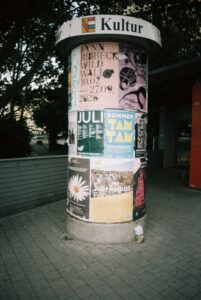
Ludwigshafen was supposedly the ideal location for this and, moreover, a fitting choice in terms of its character: a young industrial city characterised by concrete, post-war reconstruction and shift work. However, some members of the public found it provocative that their city had been chosen for the new museum building. Municipal spending on abstract art in an industrial city was perceived as provocative and rejected. For decades, Hack struggled with the location he himself had chosen. The conflict centred less on the art itself than on the question of who needs and finances public culture.In the summer of 2026, the Kunstverein Ludwigshafen is posing similar questions. As part of its annual programme and in collaboration with the New York-based artist Noah Fischer, the organisation is addressing the city’s community. An advertising column asks: ‘What should this city be an example of?’ A city that would probably never have come into being in its present form without the chemical industry, and which today ranks among Germany’s most heavily indebted local authorities.
For the Kunstverein, talking about Ludwigshafen means taking to the public space. From May to September, a trail will be created, giving rise to a discourse with various stops across the city that opens up different perspectives on Ludwigshafen. At the same time, however, the project is also a search for identity. Ameli Klein, director of the Kunstverein, speaks of the city undergoing a second adolescence.
In Ludwigshafen, the ‘not-yet’ and that which is only just taking shape are less an exception than a recurring state of affairs. Time and again, and even now, the city finds itself confronted with the consequences of various processes of structural change. For the philosopher Ernst Bloch, who was born in the city, transformation meant turning hidden and dreamt-of possibilities into social reality. Change is inherent in the material world, and utopias arise from what already exists. The Kunstverein’s programme ‘Noch Nicht: Utopia in the Making ’ takes up Bloch’s open concept of the future and examines how change manifests itself; what, specifically, is changing.
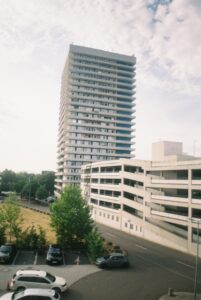
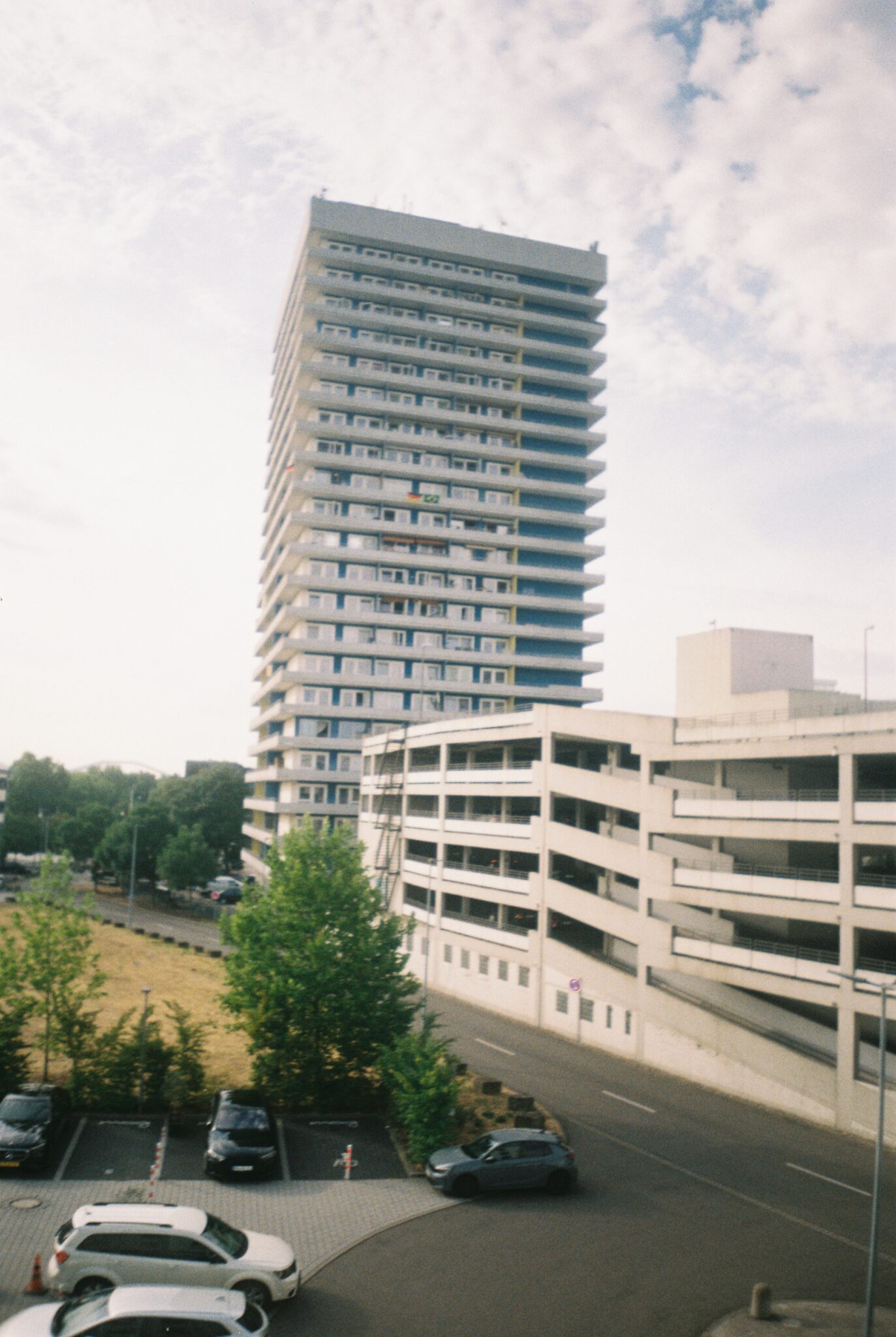
On Thursday evenings, at the ‘In Bewegung’opening , one gets a good sense of the city’s momentum. Ludwigshafen stands as a testament to post-war modernism, which finds its architectural expression in austere, minimalist façades. With its clean lines, the city exudes a sense of serenity. It is rugged, and its uncompromising functionality bears witness to a belief in social progress. Ludwigshafen’s cityscape is modernism’s honest response to the challenges of its time.
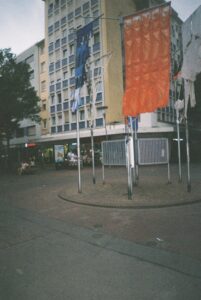
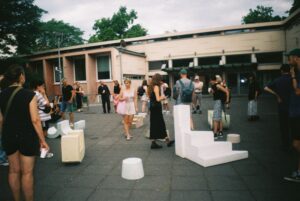
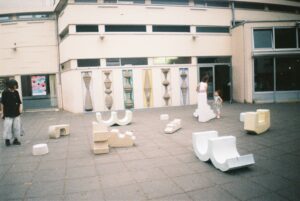
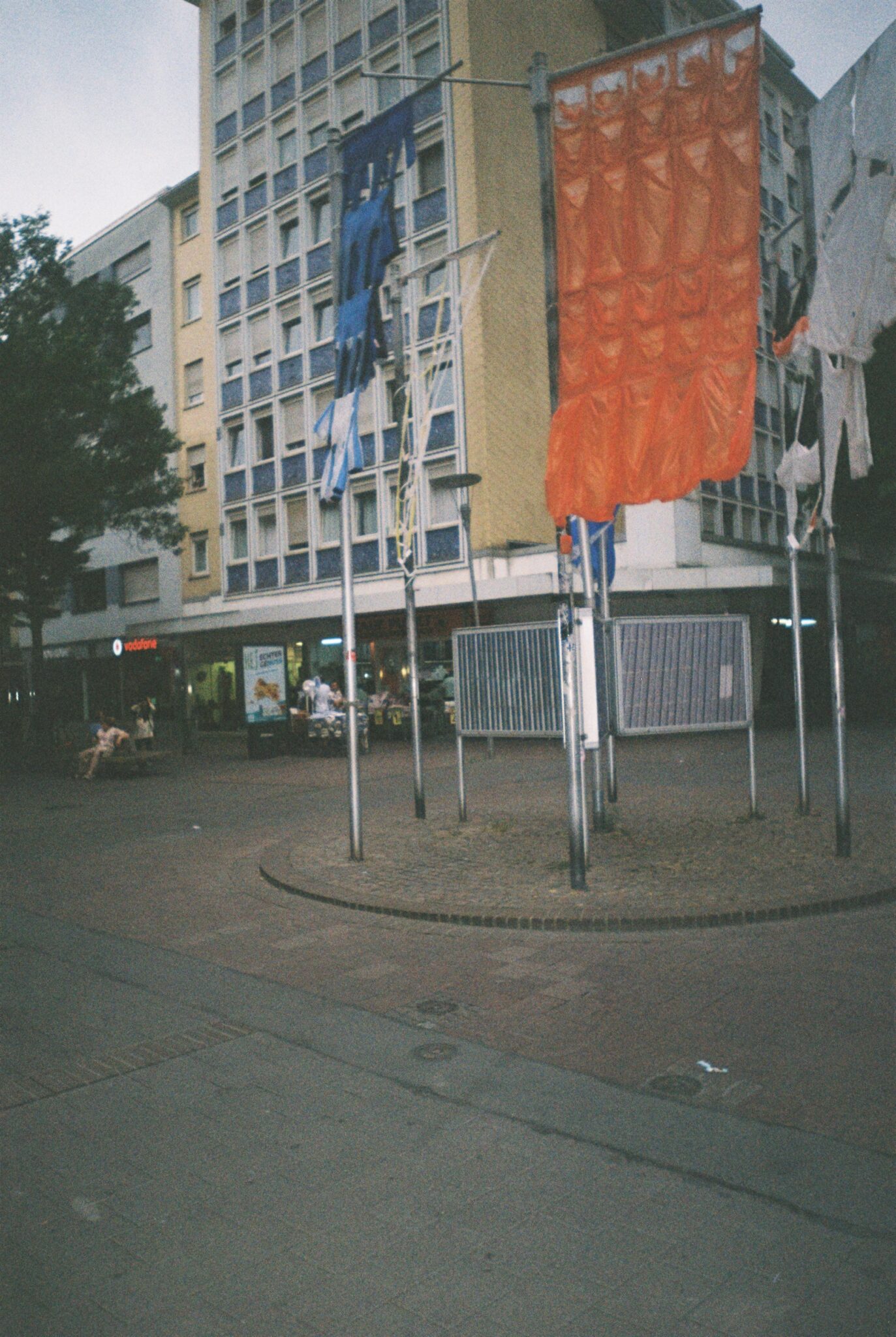
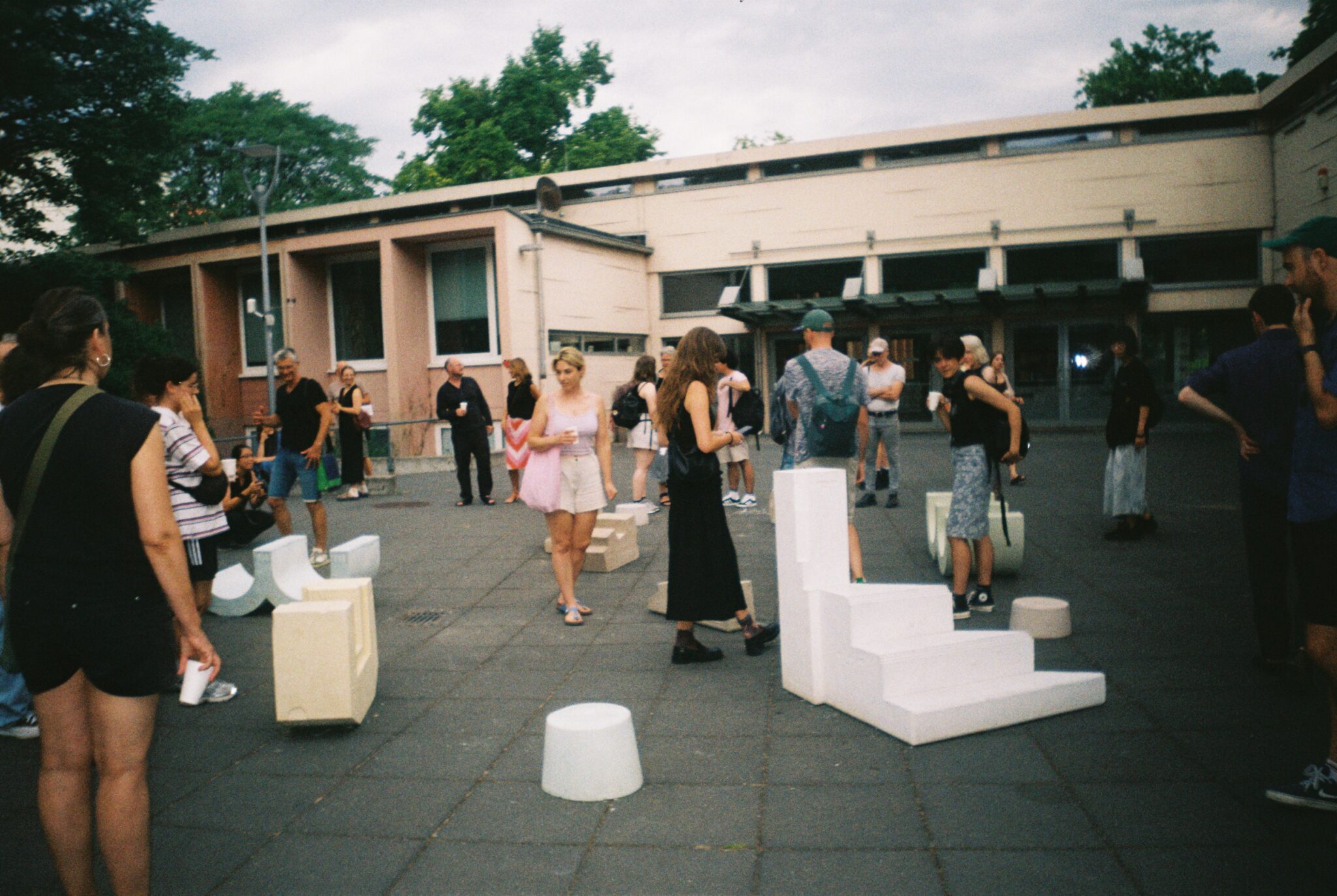
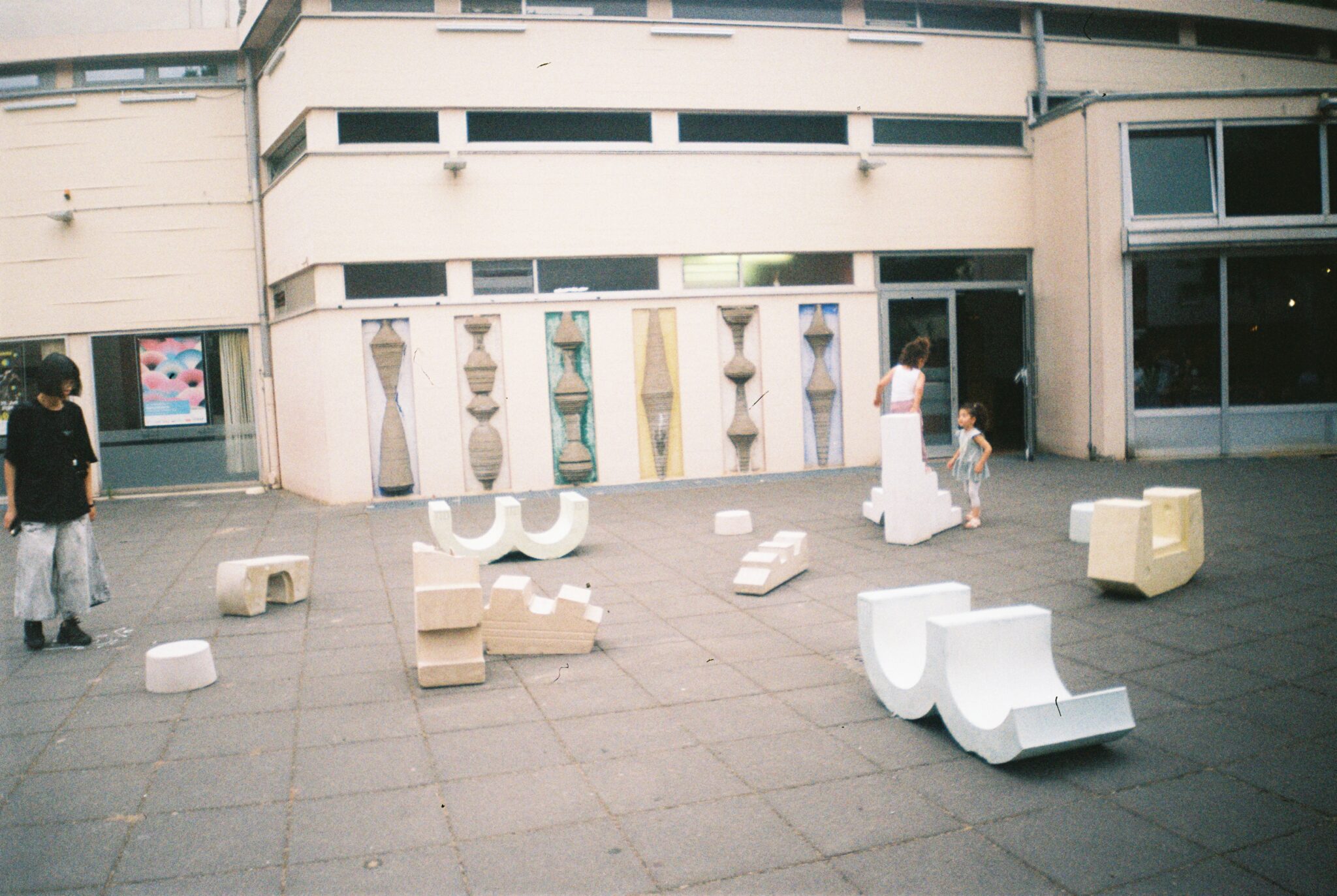
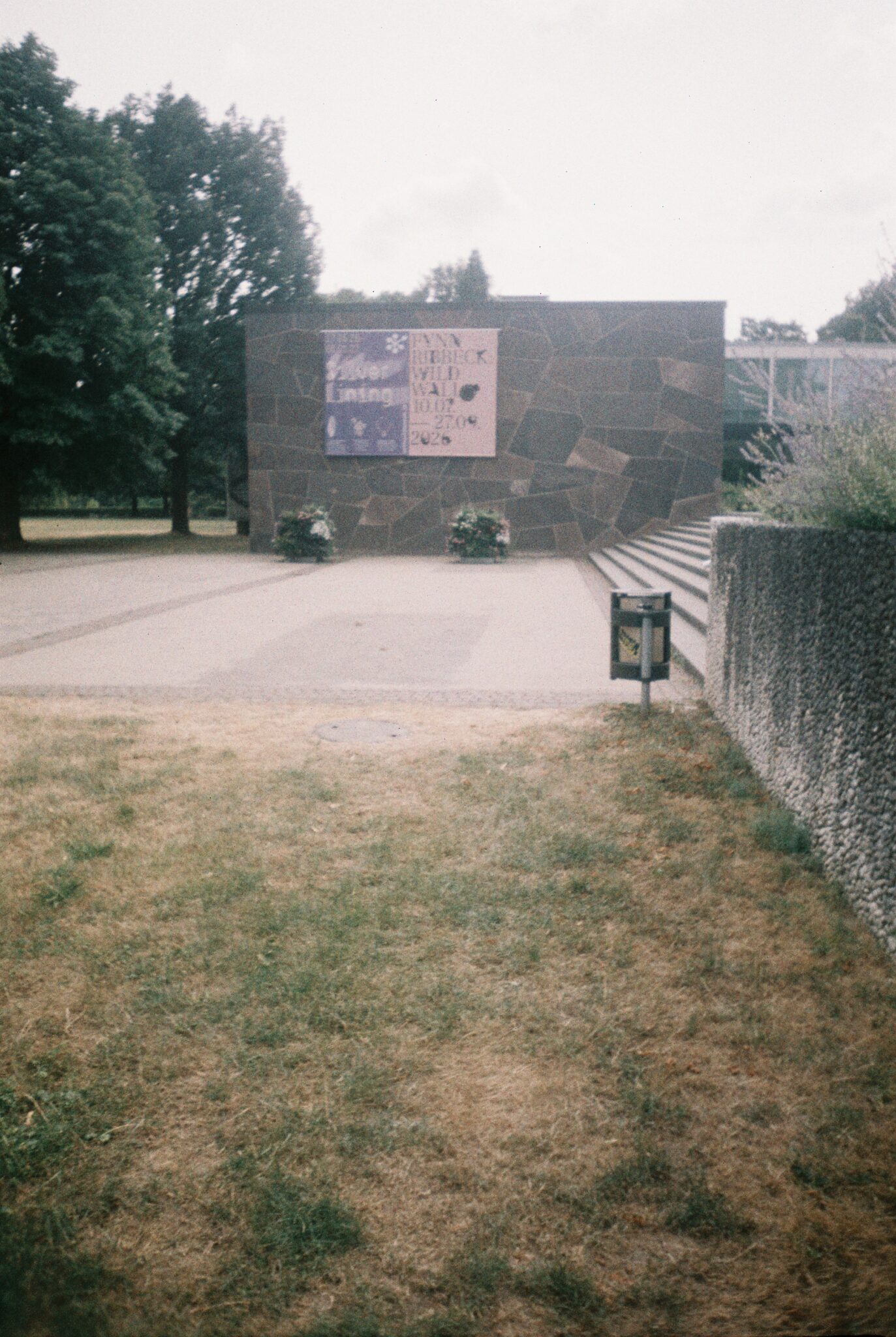
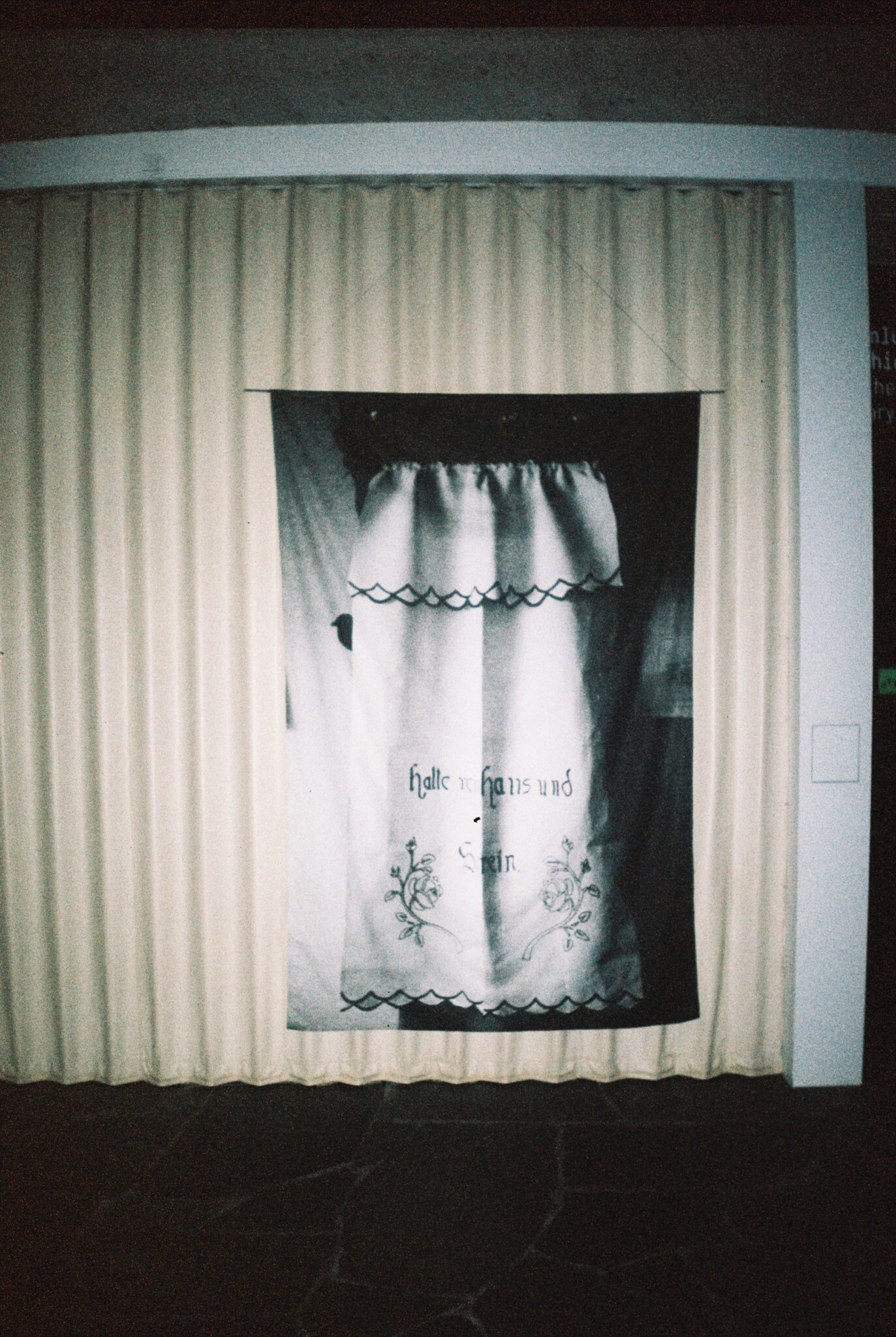
The American artist Katarina Burin explores this promise of the future – and what remains of it. In public spaces, she examines the relics of post-war architecture and asks what modernism means when it no longer feels modern. To this end, she has transformed façade elements and characteristics of buildings in the city centre into standalone sculptures. A site-specific installation was created on the forecourt of a cultural centre on Bahnhofstraße. The route then continues into a typical German shopping street, with its characteristic vacant premises. Flags on the flagpoles along Bismarckstraße reflect the façades opposite. Katinka Eichhorn takes up the architecture of her surroundings and mirrors it in a textile work. In the shop windows of a former fashion chain, Emmélie Lempert and Haru Apa Nyx display visual objects that address the female body in public space. They explore questions of visibility: who determines the gaze, and what power dynamics are inscribed in public images of bodies?
The gaze upon the body in public space is always also a gaze upon the structures that produce and regulate it. Coco Fusco’s video installation takes this connection between visibility and control one shop window further by making the perspective of the control system itself the subject of the work. In *Dolores from 10 to 10*, Fusco uses surveillance footage to reconstruct the case of a Mexican maquiladora worker who was locked up for twelve hours after attempting to form a trade union. In another video work , *Utopia, The Place That Doesn’t Exist*, Driton Selmani responds to the political reorganisation of Kosovo following the 2008 declaration of independence. A seemingly simple act in a public space in Pristina becomes the starting point for a reflection on borders, belonging and the contradictory idea of a national utopia.
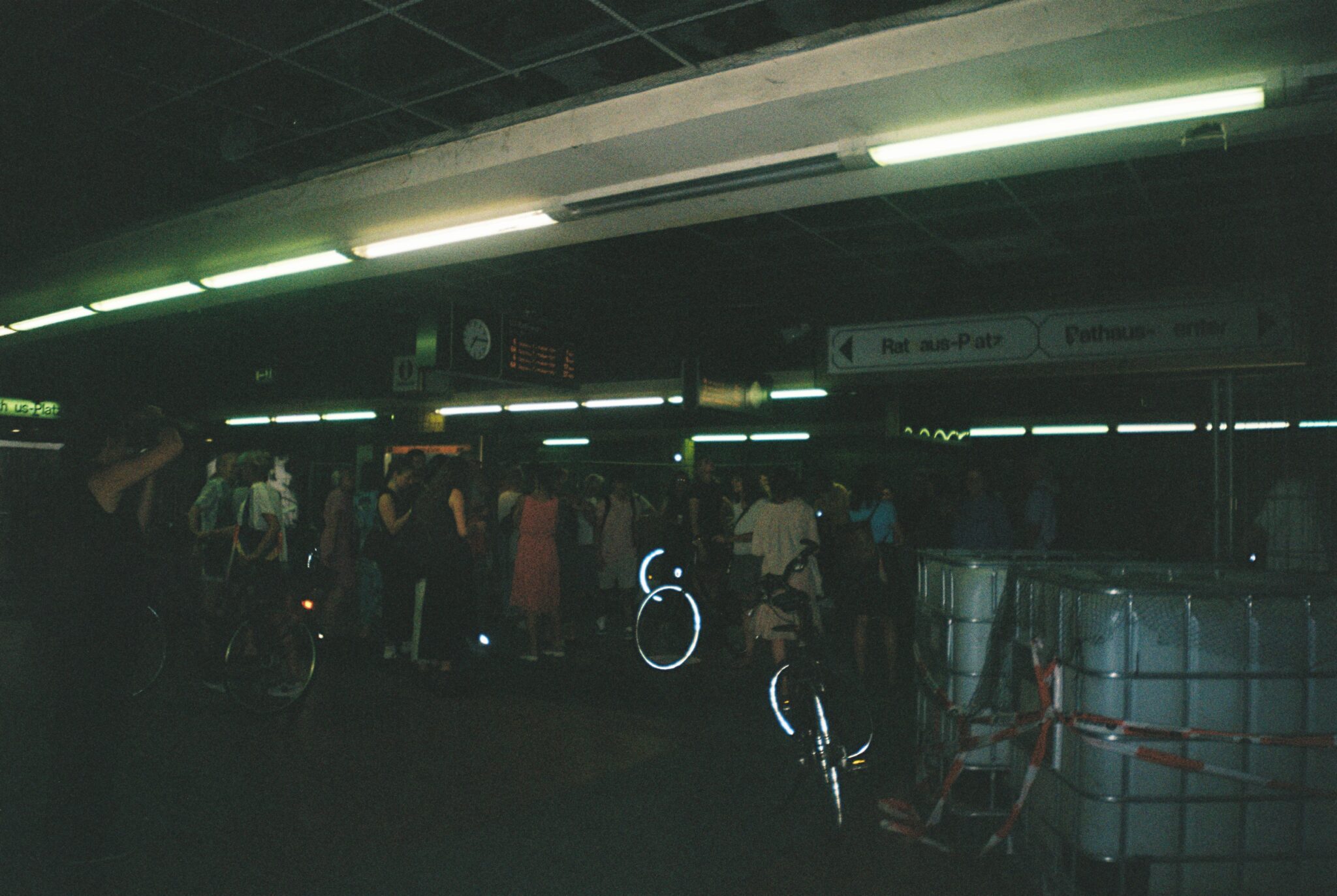
Just a few metres further on, in the utopian-dystopian-looking entrance area of a tram stop, Gabriela Pelczarska’s sound installation can be heard. She creates a sonic space from distorted engine noises. Through her work, she also alludes to the forthcoming redevelopment of the street space above ground: the old town hall and the Rathaus-Center once stood above the stop, but have since been demolished.
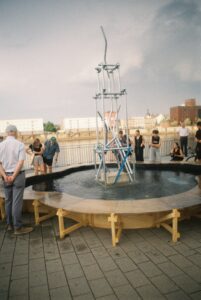
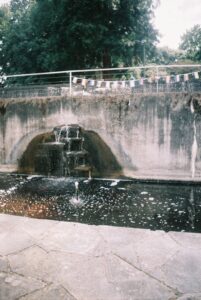
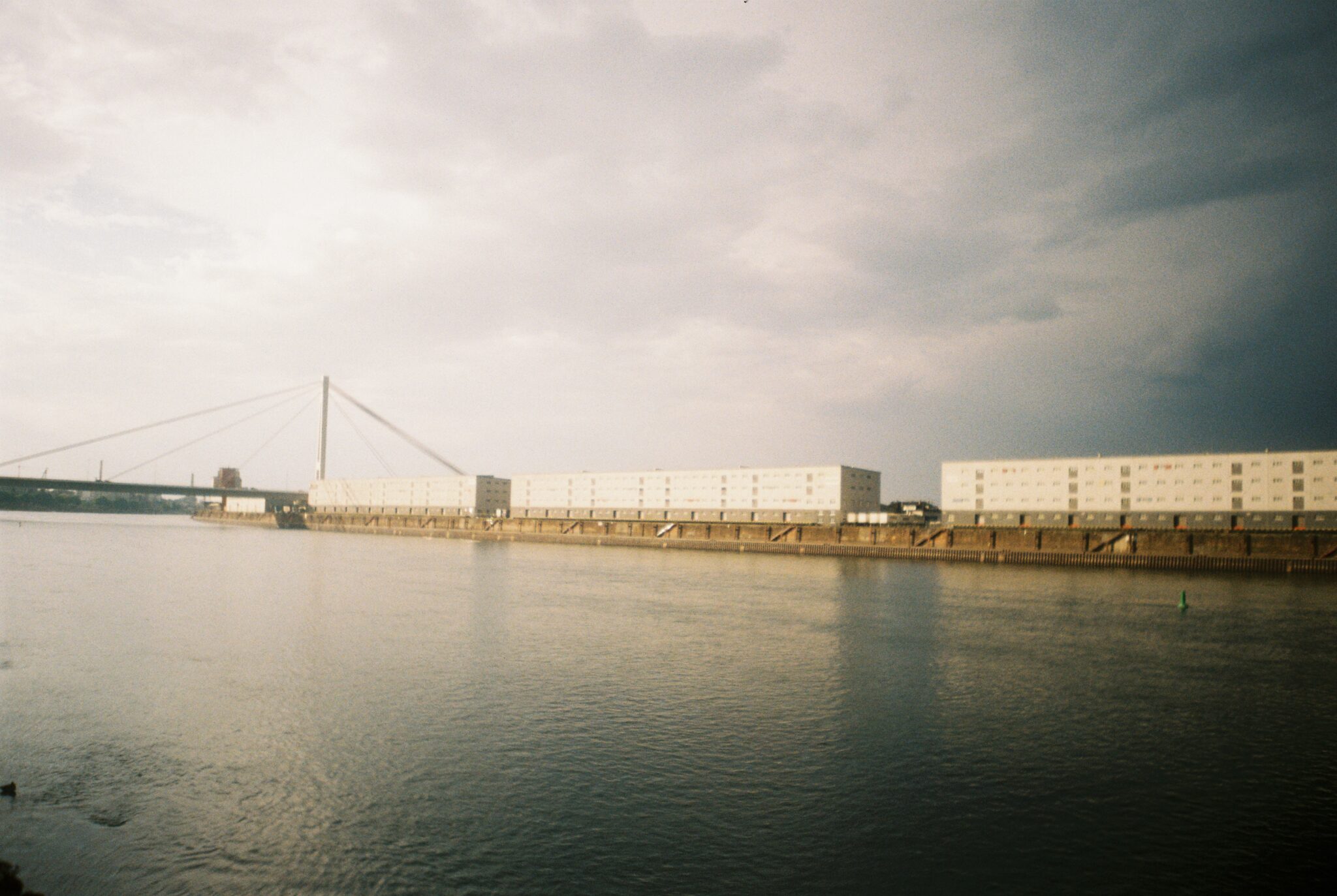
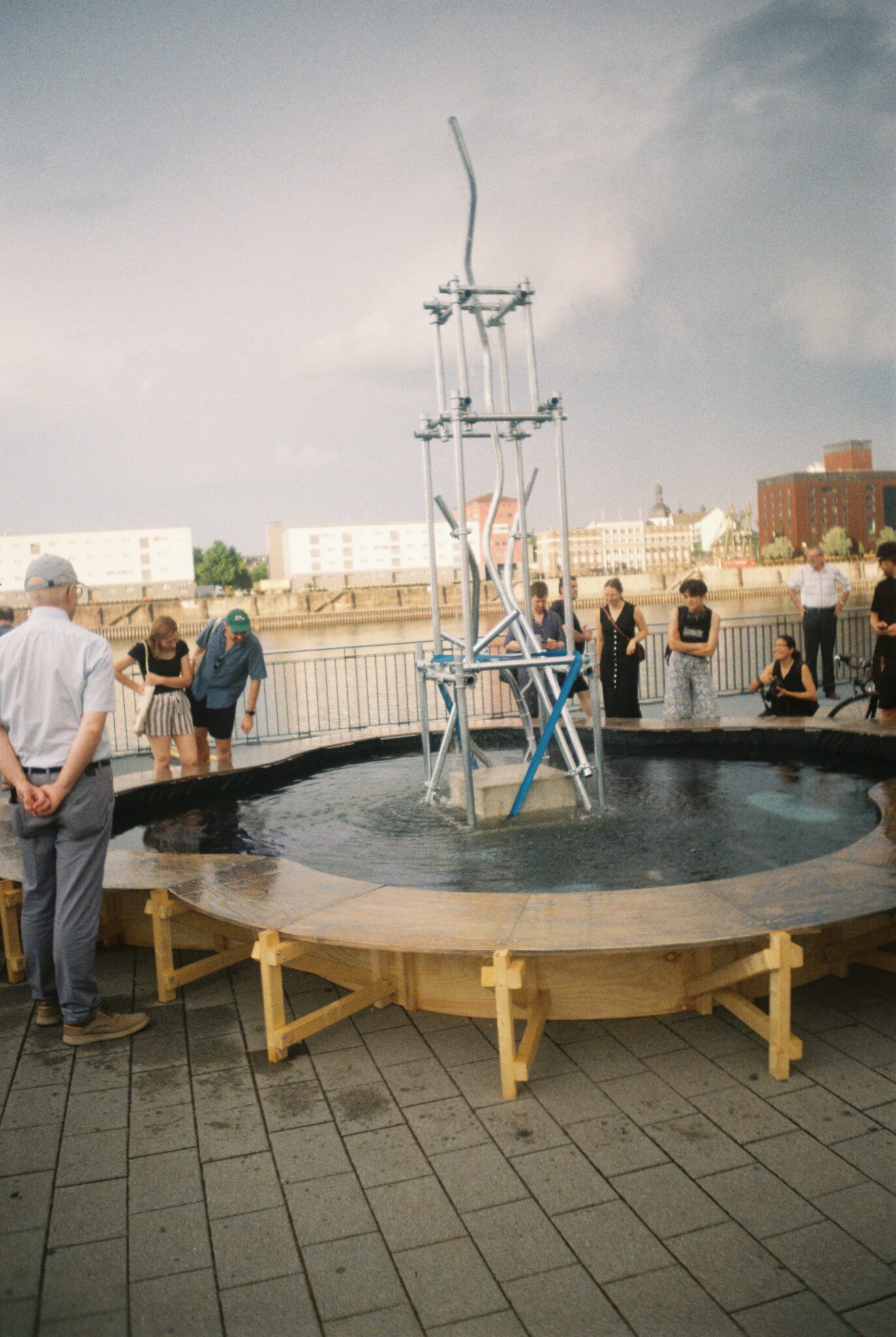
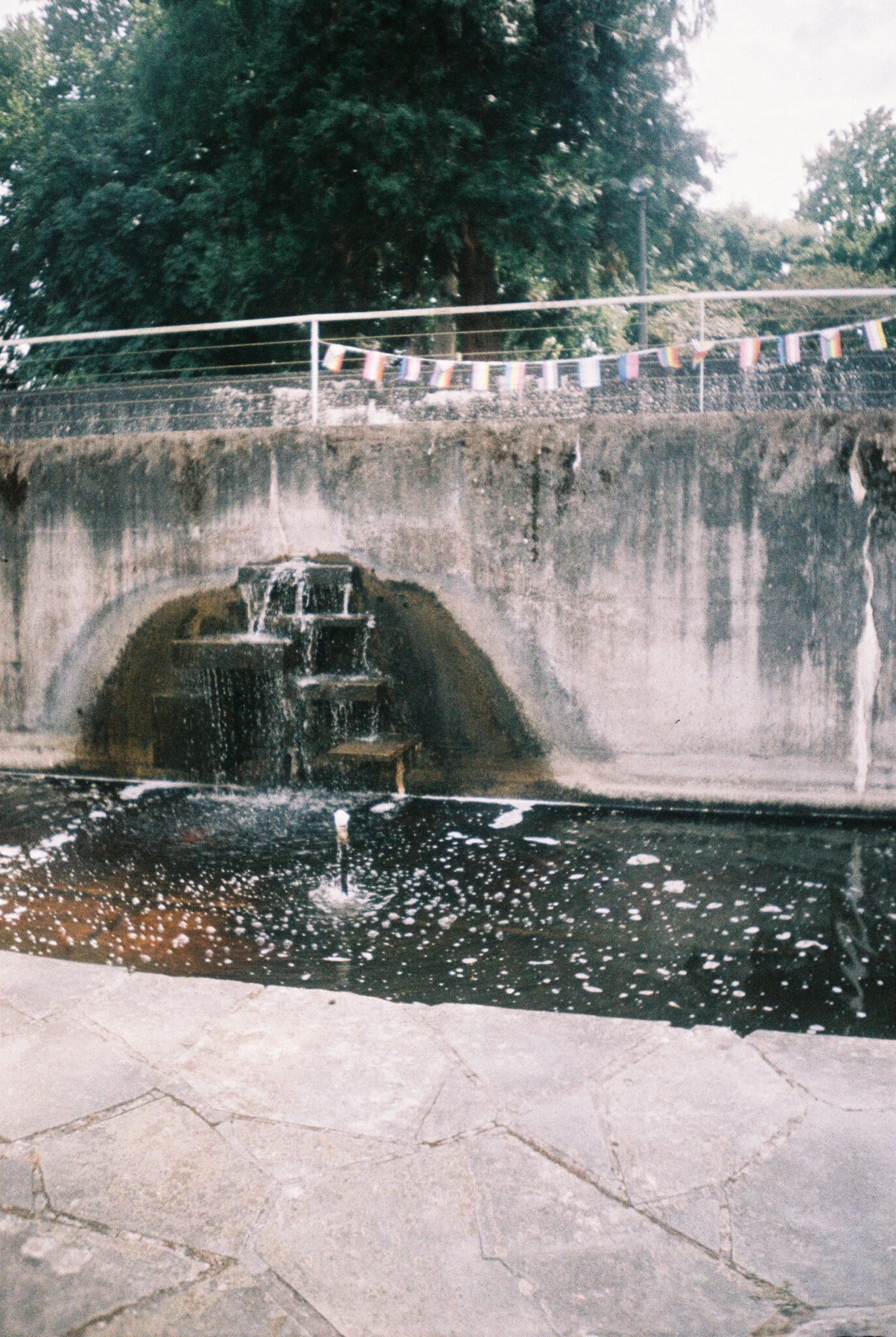
Ludwigshafen appears as a city in a constant process of negotiation, one that is continually readjusting itself. Changes do not follow clear-cut patterns, but arise from the superimposition of different layers of time, interests and urban planning visions. The discourse on necessities and the use of resources leads to the fourth stop on the exhibition tour: the Rhine promenade, where Raul Walch’s ‘Blochbrunnen’is situated . This temporary installation takes up the floor plan of the former Ludwigsbrunnen and translates it into a sculptural intervention. In a location where the surfaces are almost entirely sealed and the Rhine is noticeably low on hot 40-degree summer days, the work draws attention to the circulation and availability of water. The floor of the fountain is inscribed with multilingual word fragments and quotations from Ernst Bloch’s *The Principle of Hope *.
Perhaps it is precisely in the principle of confidence that the relevance of the ‘not-yet’ lies: those seeking possibilities must seek out places where the present points beyond itself and reveals its as yet untapped directions. Seeking out the venues where social processes of negotiation take place stems from the conviction that public life and participation do not arise solely within institutions, but rather where different realities of life converge and change is already taking shape.
The fact that the Kunstverein Ludwigshafen has chosen this path is not merely a curatorial principle, but also stems from a transitional situation: the Ludwig-Reichert-Haus, its usual venue, is currently undergoing renovation.
https://www.kunstverein-ludwigshafen.de/
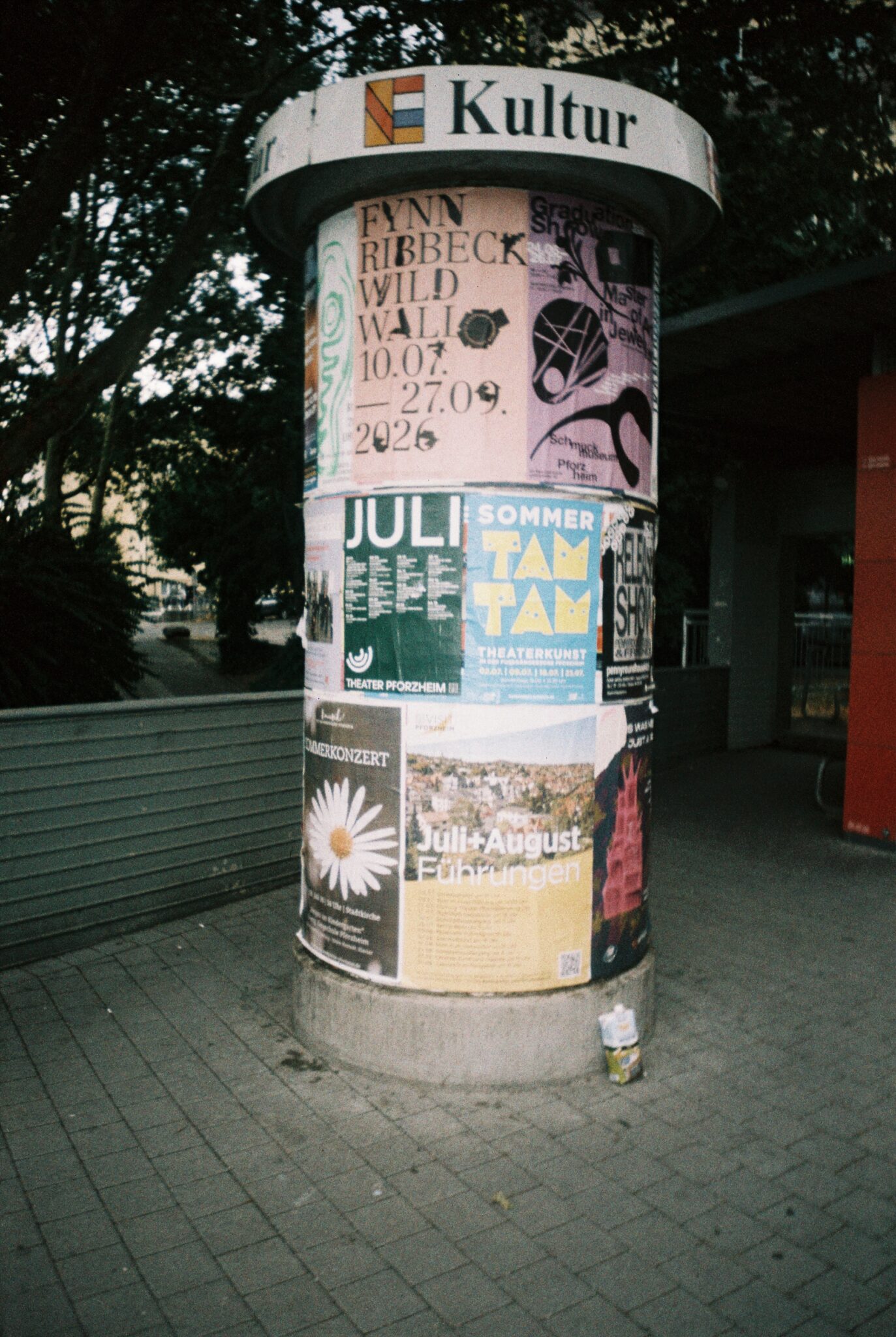
- 26.06.2026 Im Goldenen WestenKuratorische KontaktzonenKunstverein Pforzheim
Der Kunstverein Pforzheim ist die vierte Station einer Recherche zu insgesamt acht Kunsträumen, Kunstvereinen und Initiativen in Ost- und Westdeutschland, die den Dialogfeldern und künstlerischen Residenzen 2027 vorausgeht.
Die Orte verbindet, dass sie in Gemeinden und Regionen arbeiten, die auf unterschiedliche Weise von Transformationsprozessen geprägt sind. Im Zentrum steht der Austausch darüber, wie sie auf gesellschaftliche, räumliche und strukturelle Veränderungen reagieren und welche Strategien sie dafür entwickeln.
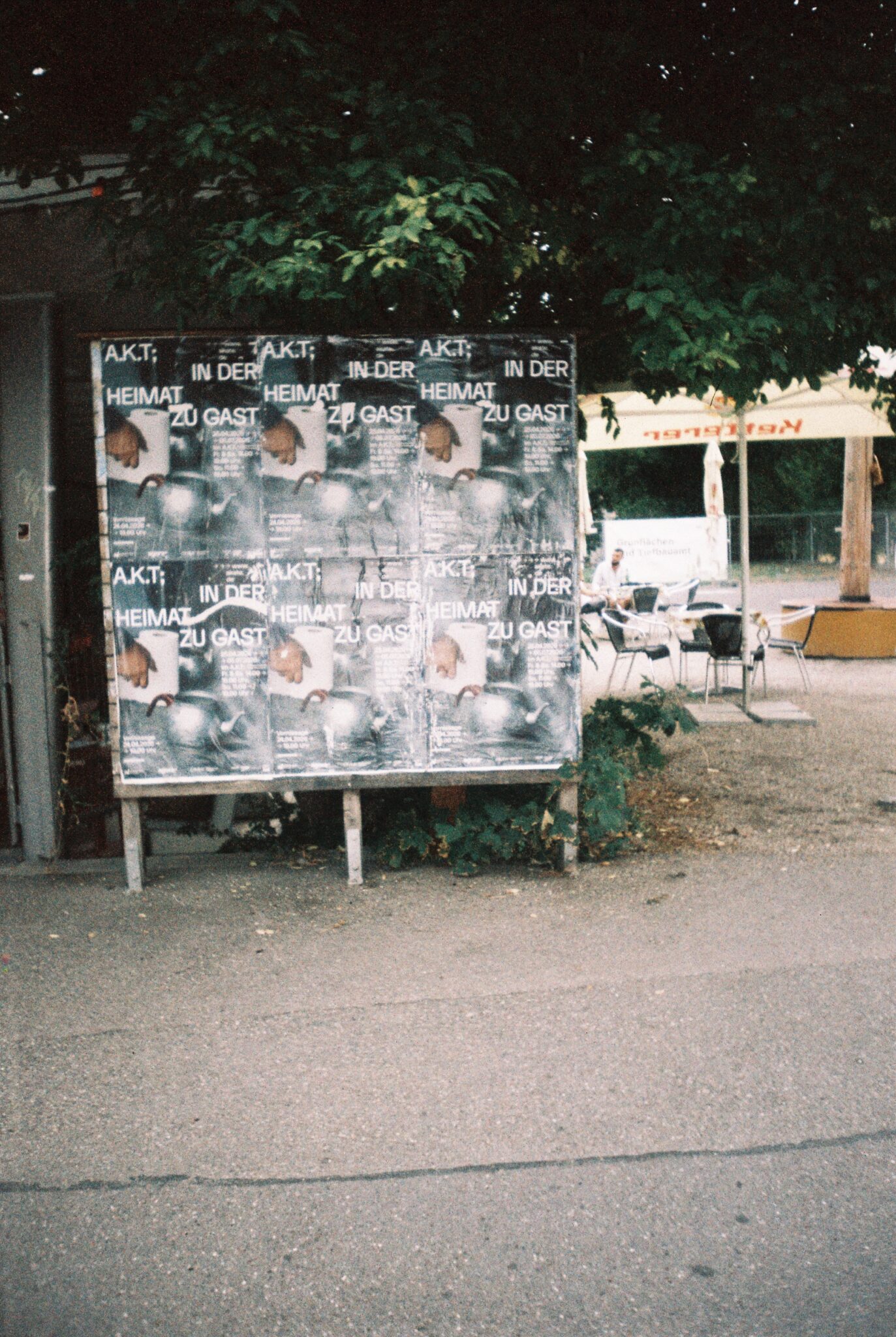
Mit My Teeth Eroding While I Sleep, einer Tanzperformance von Abdallah Damra, eröffnet an einem Hochsommerabend 2025 unter freiem Himmel die Ausstellung Boxing Culture in Pforzheim. 70 zusammengerollte orientalische Teppiche pflastern den Boden des Ausstellungsraums. Die Teppiche sind Nachlässe von Familien mit unterschiedlichen kulturellen Biografien und werden zu Trägern persönlicher und kollektiver Geschichten. Sie verweisen auf die Erfahrungen der sogenannten Gastarbeiter:innengeneration. Als Sohn einer Familie mit Migrationshintergrund aus Südostanatolien und geboren in Pforzheim wächst der Künstler Firat Yildiz in verschiedenen Bezugssystemen auf. Er lebt und erlebt ein „Dazwischen“. Diese kulturellen Überlagerungen sind Ausgangspunkt seiner künstlerischen Praxis und stellen zugleich Fragen zum Konstrukt „Kultur“, das durch die Ausstellungszeit auf unterschiedliche Weise und auf verschiedenen Ebenen hinterfragt wird. Als eben genau solch ein multifunktionales Kulturzentrum und erster Museumsbau der Nachkriegszeit wurde das Reuchlinhaus 1961 eröffnet. Mit Boxing Culture beginnt zugleich eine neue Episode in der Geschichte des Kunstvereins. Das Fest ist sogleich die erste Intervention unter der neuen künstlerischen Leitung von Daria Schroth und Janusz Czech.
Gold bedeutet Arbeit
Als Arbeiter:innenstadt im badischen Südwesten Deutschlands, geprägt von der Schmuck- und Uhrenindustrie, ist Gold tief in ihre Topografie eingeschrieben. Und doch erzählt Pforzheim von einer differenzierten Ökonomie. Stark zerstört vom 2. Weltkrieg und Jahrzehnte im Wiederaufbau, funktioniert das Narrativ des prosperierenden Westens in Pforzheim nicht eindeutig. Überdurchschnittlich hohe Arbeitslosigkeit und ein politisches Klima, in dem sich Autoritäten parlamentarisch artikulieren. Das Stadtbild wirkt komplex. Und darüber spricht der Kunstverein. Über Herkunft, Klasse, Zusammenleben, Gemeinsinn und politische Affekte, die unauflösbar ineinandergreifen.
Pforzheim hat eine der höchsten Quoten von Menschen mit Migrationshintergrund. Der Anteil von Bürger:innen ohne deutschen Pass liegt bei etwa 32,5 Prozent. Rechnet man Personen mit Migrationshintergrund hinzu, steigt dieser Wert sogar auf fast 60 Prozent. Das bringt eine Bandbreite verschiedener Kulturen zusammen, die zusammen rund 125.000 Einwohner:innen ausmachen. Auch ist Pforzheim vergleichsweise jung.
Diese diverse und junge Stadtgesellschaft über die Mittel der Kunst – oder die für gewöhnlich vorbehaltenen Kapazitäten der Kunst – stärker in die Stadtgesellschaft einzubinden, ist das Engagement des neu formierten Kunstvereins. Er öffnet einen geschützten Raum für Biografien der Diaspora und postmigrantischen Perspektiven. Damit möchte der Kunstverein insbesondere jenen Perspektiven Raum geben, die in der statistisch vielfältigen Stadtgesellschaft zwar überproportional vertreten, gesellschaftlich jedoch noch immer kaum sichtbar und selten beteiligt sind.
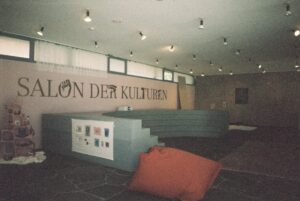
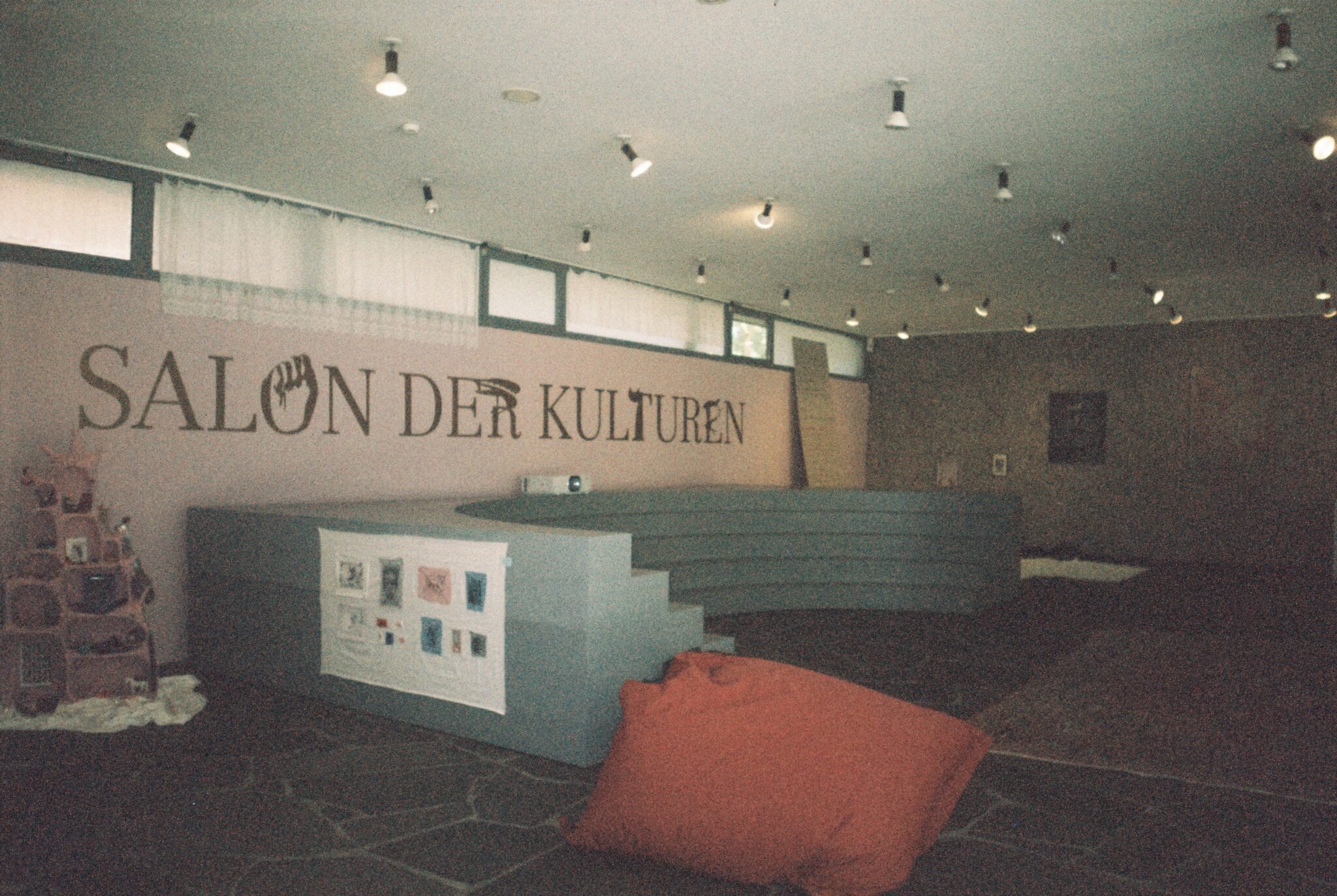
Salon der Kulturen
Die Funktion einer Kunstinstitution infrage zu stellen oder neu zu denken, ist für die künstlerische Leitung ein zentraler Ausgangspunkt. Dabei ist ihr Haus unausweichlich ein politischer Raum, in dem dekoloniale Wissensformen sowie nicht-lineare Lesarten Einzug finden.
Die neue Ausrichtung zeigt sich insbesondere im neu eingerichteten Salon der Kulturen. Der Raum mit Blick auf den Hof entzieht sich der Logik kuratorischer Autorität und ist „freigegeben“ für Initiativen. Der Raum wird weniger vom Team des Kunstvereins bespielt als von ihm geöffnet. Communities der Stadt eignen sich ihn temporär an und produzieren Öffentlichkeit. Damit geht einher, das Ausstellen auch als politischen Akt zu verstehen. Der Kunstverein sieht sich in der Rolle der Vermittlung. Dass sich das Ausstellungsmachen ändert, insbesondere dann, wenn man mit Communities zusammen und prozessorientiert arbeitet, erfahren derzeit viele Kunstvereine. Das Haus zu öffnen bedeutet auch, dass Ressourcen wie Gästewohnungen für Künstler:innen benötigt werden. Dies sind konkrete Herausforderungen für die Häuser in den kommenden Jahren.
Pforzheim ist eine Stadt, die soziale Spannungen aushält. Und der Kunstverein ist ein Ort, der im Plural von Kulturen spricht: als aktivistisches Empowerment durch Kunst, die Stadtgesellschaft so darzustellen, wie sie ist, und damit auch ein Gegenbild zu der Vorstellung aufzuzeigen, dass Baden-Württemberg, dass der Westen automatisch Wohlstand, Sicherheit und Aufstieg garantiert.
https://www.kunstvereinpforzheim.de/
- 10.06.2026 The cartography of a snail’s shellKuratorische KontaktzonenGrand Snail Tour & Urban Arts Ruhr
The Grand Snail Tour projectby Urbane Künste Ruhr is the second stop in a research initiative covering a total of eight art spaces, art associations and initiatives in eastern and western Germany, which precedes the ‘Dialogfelder’ and artistic residencies in 2027.
What these venues have in common is that they operate in communities and regions that are, in various ways, shaped by processes of transformation. The focus is on an exchange of ideas regarding how they respond to social, spatial and structural changes, and what strategies they develop to address them.
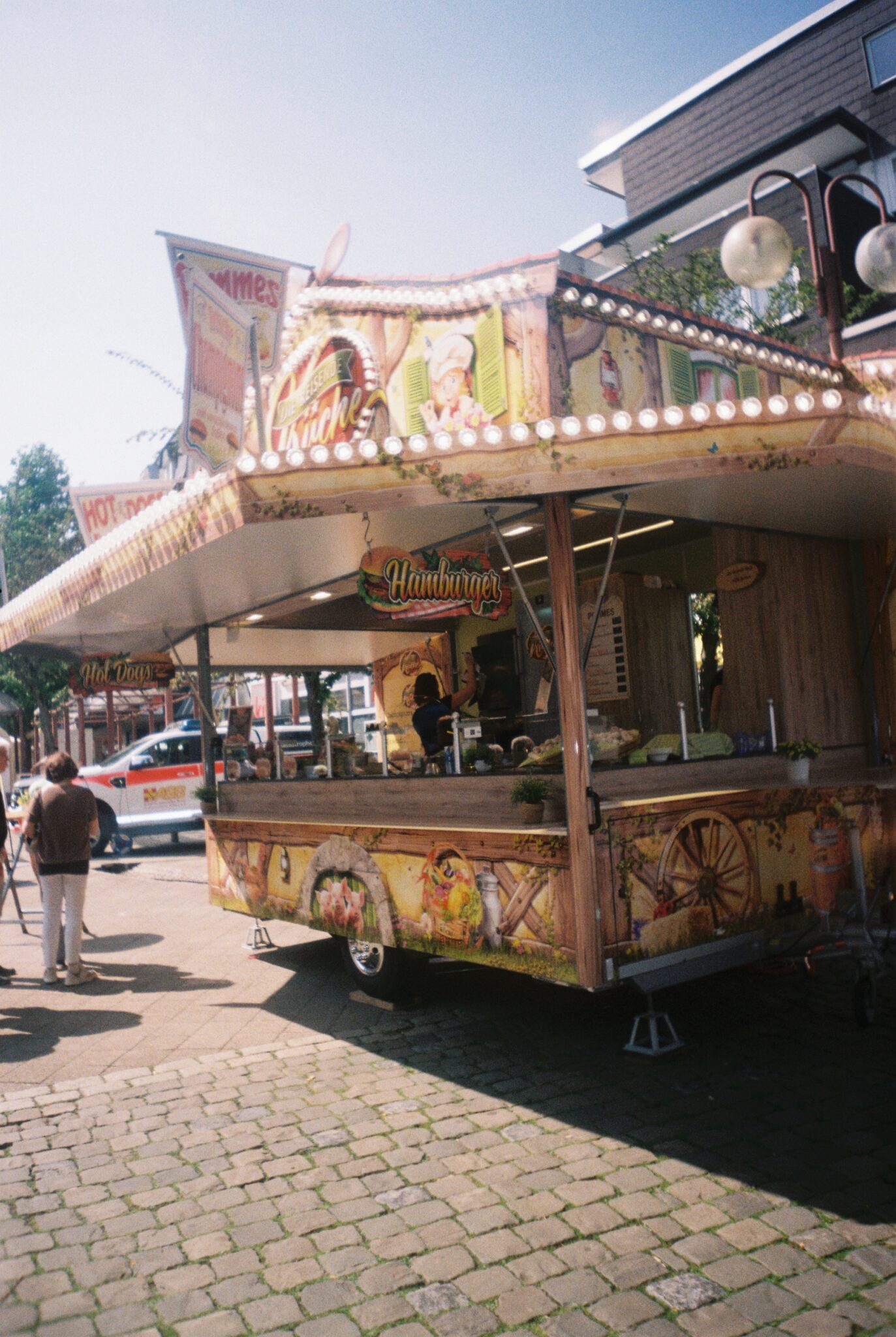
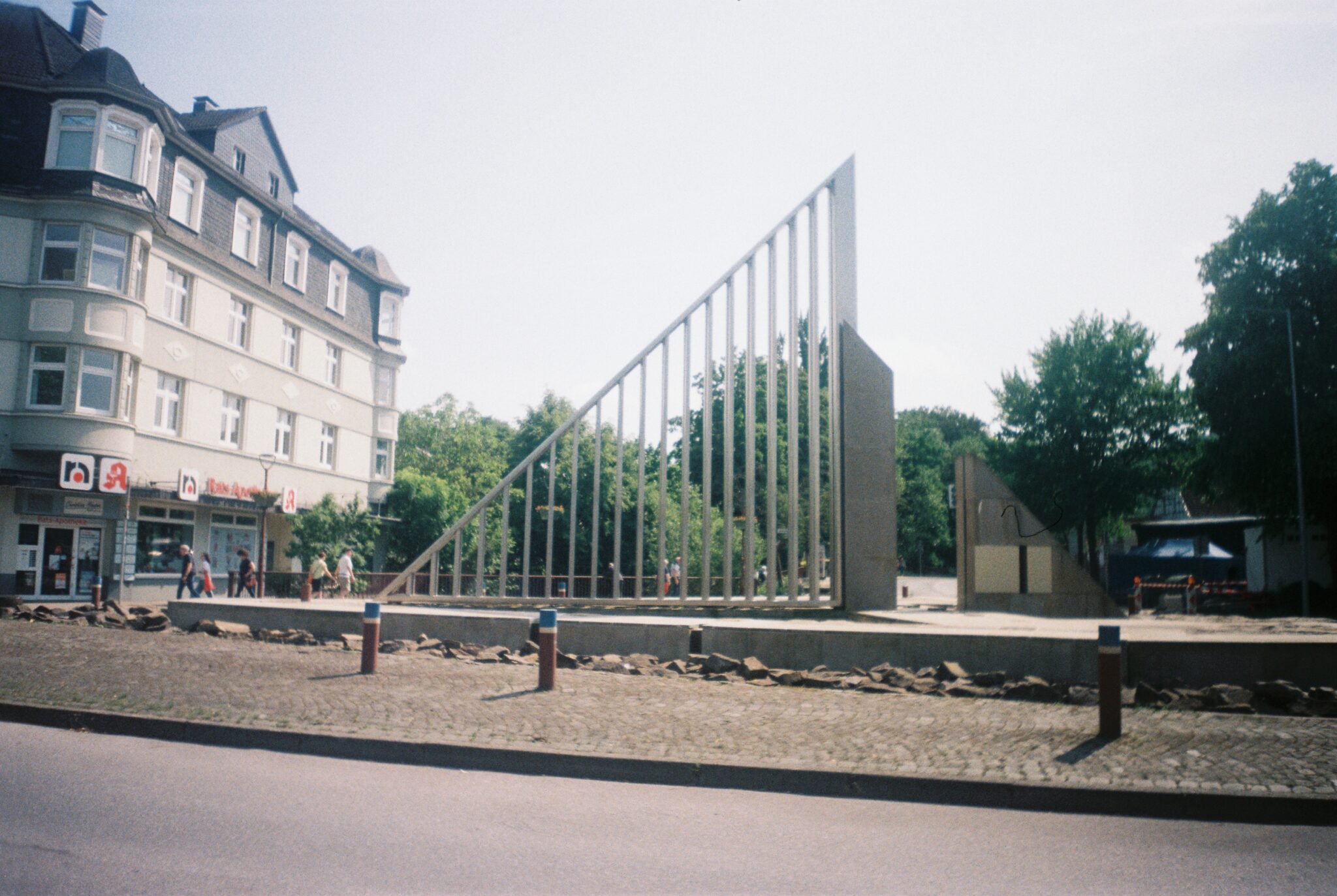
It is Boulevard Gevelsberg. Mittelstraße, normally a shopping street, becomes, for three days, a makeshift conglomeration of the typical elements needed to make a town festival a town festival. As if one had witnessed this interplay countless times before, the arrangement in this town somehow still veers into discord. The Polish-German artist Janusz Hajduk-Gubalke recognised as early as 1989 that this small town is not easily deciphered. On a metal plate at Gevelsberg’s sculptural town emblem, the ‘Stadtharfe’, one finds the Sator Square: an enigmatic inscription from antiquity that can be read in several directions.
When you arrive in Gevelsberg, you get the feeling that something is fraying here. This is because the West German town, with its population of just under 30,000, lies at the point where the Ruhr region begins to dissolve. The high density of the Ruhr region gives way here to a hilly landscape, and the area feels neither distinctly like the ‘Pott’ nor distinctly like the Bergisches Land. Gevelsberg is not on the main route, but can be reached from Dortmund in a short time by the Regional Express. The connections are good, even in the evenings. And so Gevelsberg’s double-track station forms part of the Ruhr Metropolis’s tightly-knit infrastructure, making it one of its 53 cities.
53
One of 53 and, at the same time, the 29th. This is not an actual administrative number, but rather a stop on a tour following a logic modelled on the shape of a snail’s shell: the Grand Snail Tour. A three-year spiral journey through the Ruhr region, visiting all the cities that make it up. Public spaces are transformed into temporary exhibition venues, and art is actively brought out into the regions. The project is initiated by Urbane Künste Ruhr.
Just as a snail’s shell grows from the inside out, the tour builds up from the periphery towards a central point. Starting in Xanten – in the west of the Ruhr region – it first moves northwards, then heads east, and finally heads south. This rotational pattern continues until it reaches Herne. However, Herne – number 53 on the route – is by no means the declared destination, nor is it the ‘final’ stop. On the Grand Snail Tour, every stop is given equal attention. In a metropolitan region with five million inhabitants, there are many voices ,and so the Grand Snail Tour reveals alternative perspectives on the superstructure of a region shaped by coal mining and the steel industry – a legacy that continues to define its identity to this day.
What you see when you don’t go straight ahead
How does one interpret a region’s perspectives and trends? To understand a region’s developments, it is wise not to adopt a linear perspective, but to move in meandering paths. This is how transformation can be understood. In three years’ time, change will become apparent. Not just structurally. Election results, the political mood and the accompanying social shifts will also be felt. Following the principle of circular movements, one repeatedly finds oneself in the vicinity of a region previously visited. In this way, differences from place to place over time can also be recognised. Time is a factor of no small significance here. In a three-year project, the pace is comparatively slow compared with regular exhibition cycles, butit is not rigid.
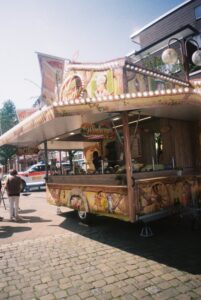
When mobility becomes the starting point, the question of the form it should take inevitably becomes a challenge. How can an exhibition space travel? The answer was found in a market trailer, which was adapted for the project. The stops take place every two weeks, usually on Thursdays. They are planned four to six months in advance. A curatorial role was created specifically for this task, which is held by Julian Rauter. The venues, local participants and the programme for each stop are carefully selected by the team – not least for administrative reasons. At the same time, circumstances can change, even spontaneously. Coping with this is part of the project and is perhaps even what it is secretly all about.
The Grand Snail Tour is therefore also the result of a shift in thinking about how we organise exhibitions. The individual stops are designed as processes. This allows us to adapt to changes and respond to the unexpected, says Britta Peters, artistic director of Urbane Künste Ruhr. By remaining more adaptable and removing the time pressure that often dictates the creation of exhibitions, more granular and nuanced formats emerge, which simultaneously challenge us to continually re-examine and reassess our own work.
A tour within a tour
To arrive, one must first set off. That is why the day in Gevelsberg is being rewound. For the Grand Snail Tour, it begins around 15 kilometres further north.
The starting point is Sprockhövel, stop number 28. The connecting element – and at the same time the day’s actual artistic intervention – is a walk with the Cologne-based artist Boris Sievert. From Sprockhövel, the day trip winds its way through the region. It follows the traces of transformations that have become inscribed in the architecture, infrastructure and the realities of the residents. Starting in the countryside, the route leads past industrial landscapes and right through the city. Since 2000 , through his ‘Office for City Trips’, he has been offering so-called package tours to places that can just as easily be read as non-places. His travel agency exists less as a shopfront and more as a practice.
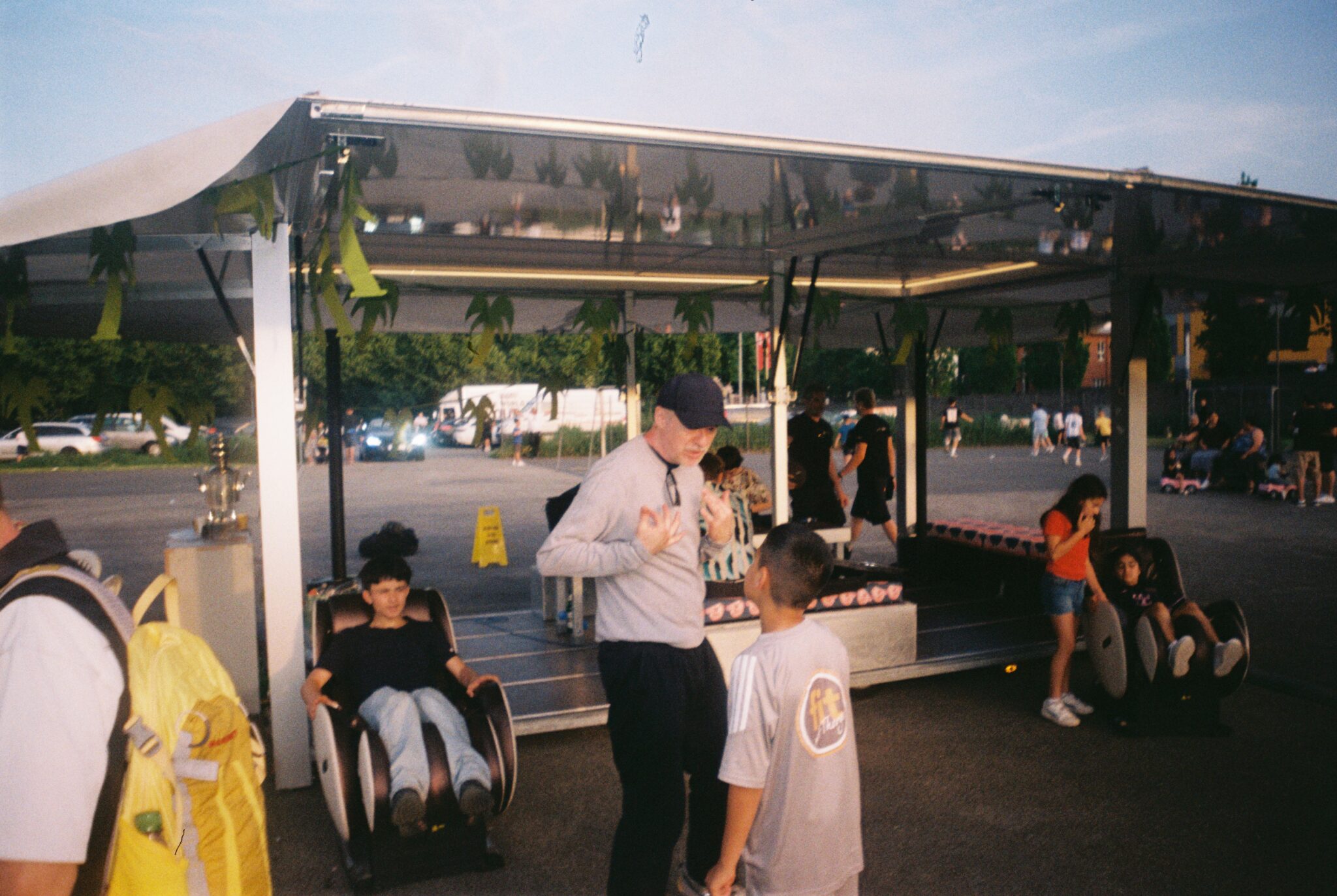
Meanwhile in Gevelsberg: A team of around six people is setting up the trailer, which has been delivered by lorry. The setup is completed within an hour in a car park within a park on the banks of the Ennepe. Everything needed has been brought along. Toilets are available at a nearby kebab shop. Works by Cem A. and Cosima von Bonin have been brought along. The selection of works from the collection’s storage facility in Bochum does not follow any fixed order, but is decided anew at each stop.
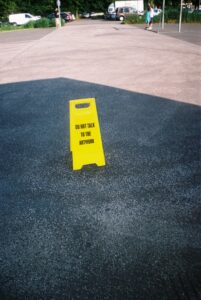
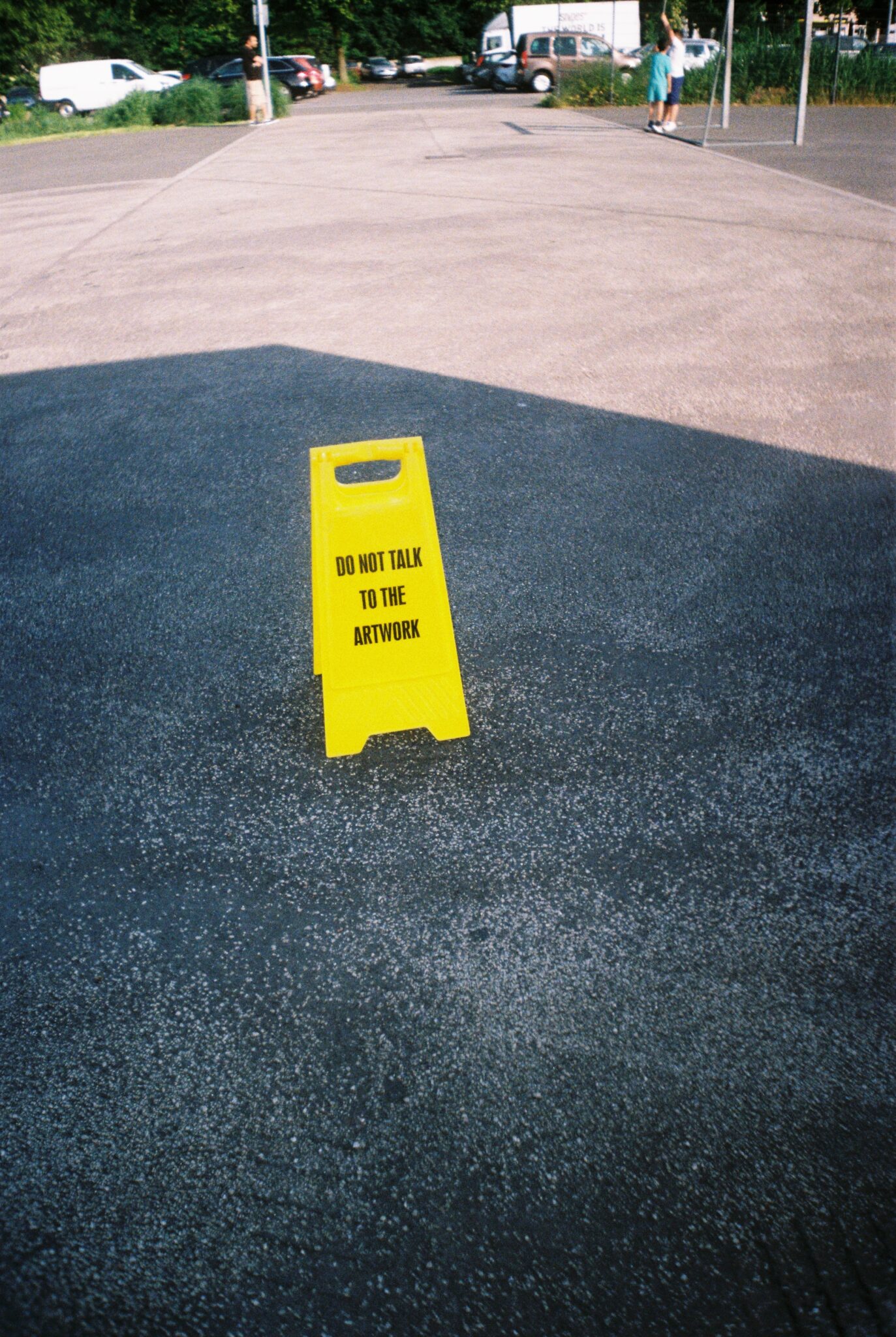
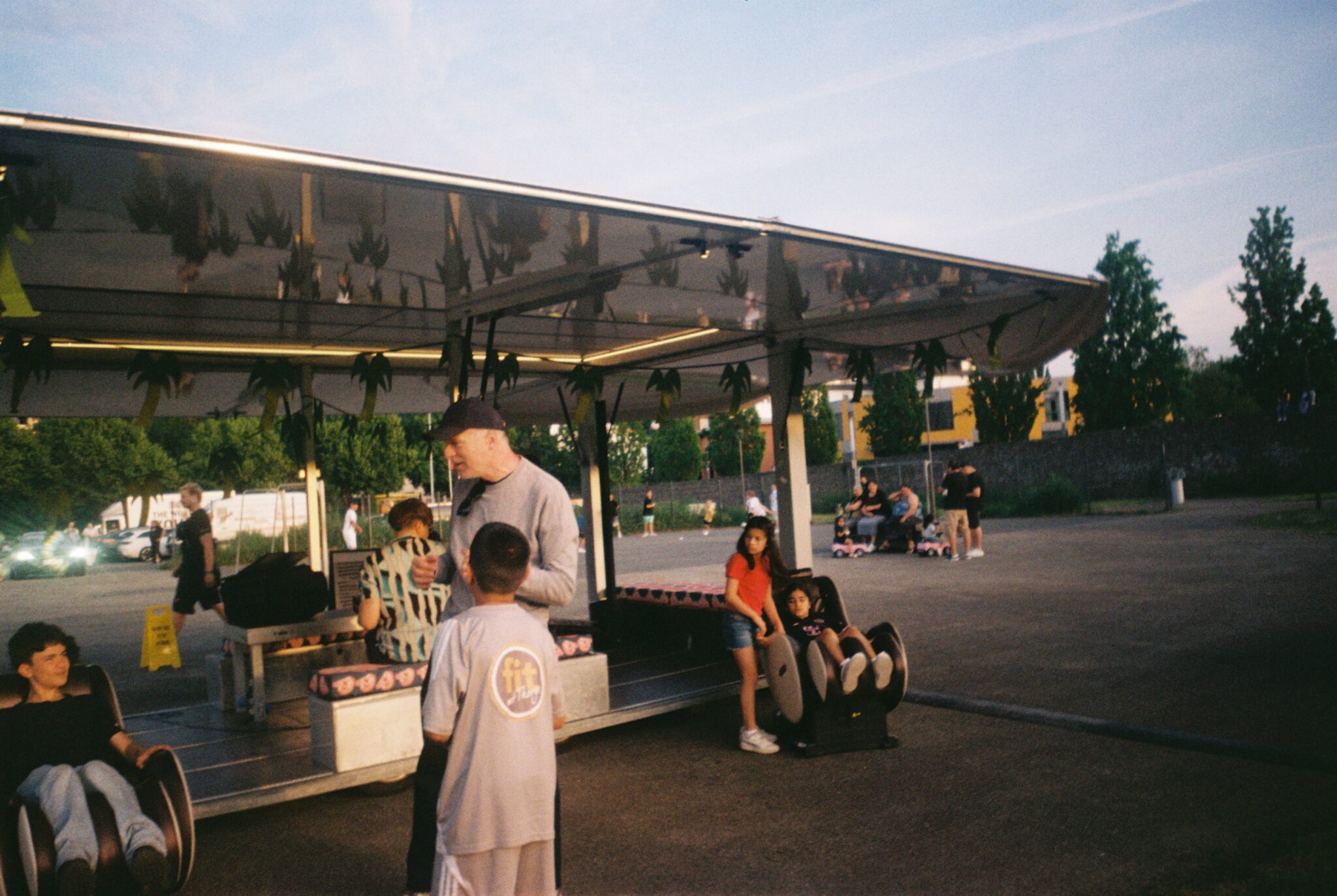
Some of Cosima von Bonin’s 7,000 palm trees are therefore fluttering by the trailer today. Stop signs by Cem A. are set up around the trailer. They encourage people to stop, but at the same time pose art-related questions or make statements; perhaps also serving as a point of contact between the public and the decentralised art institution. The question remains deliberately ambiguous: who, actually, is the public? Who does public space belong to? In Gevelsberg, this quickly becomes clear: the children.
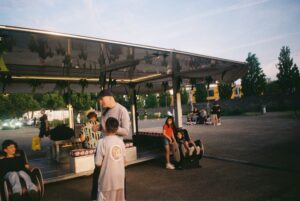
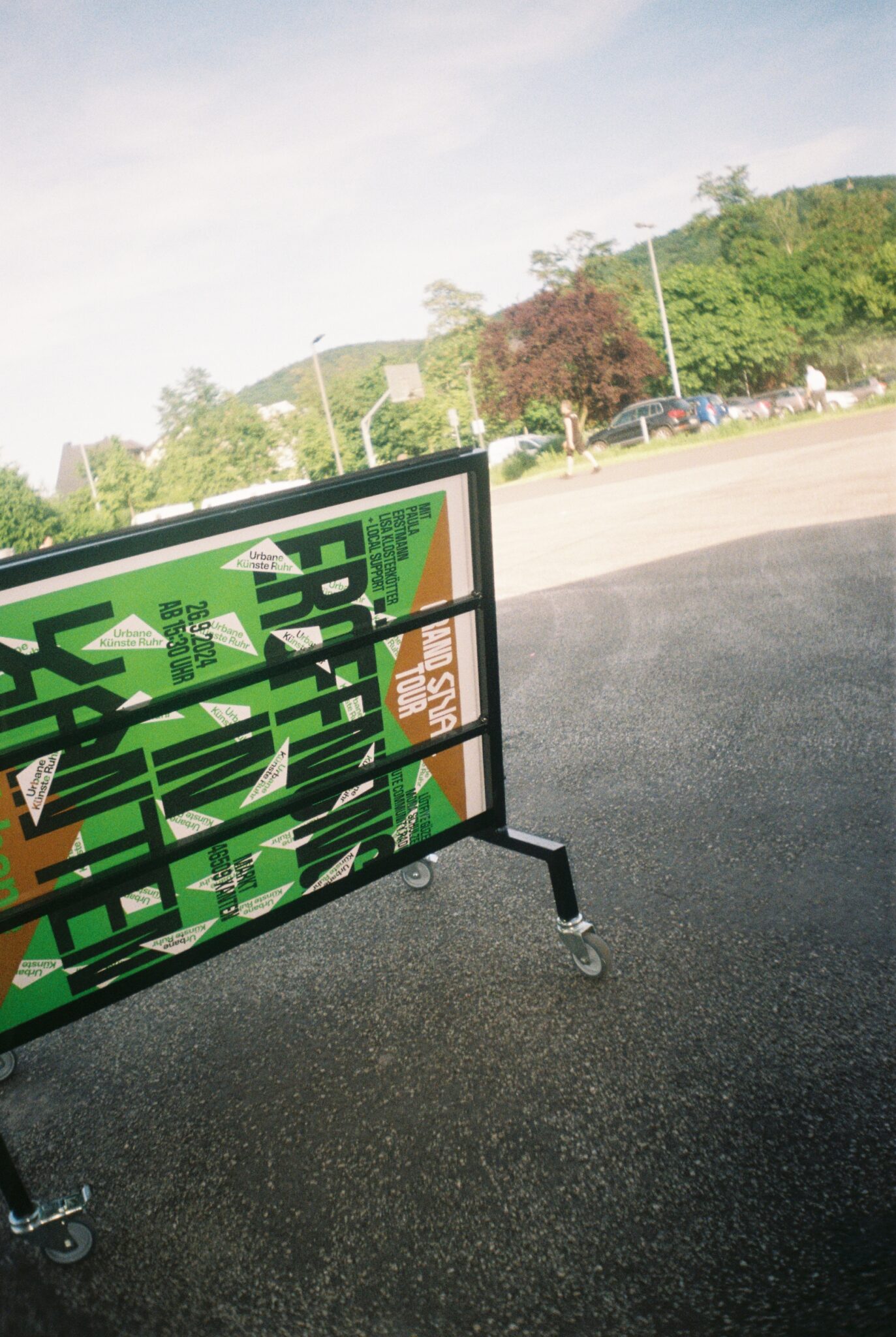
The car park doubles as a basketball court. Children are drawn to the trailer, not least because of the colouring books by the artist Stefan Marx, which were designed specifically for the Grand Snail Tourcollection . At each stop, there are posters which have been placed in a poster stand and can be taken away. A live performance set is provided by the DJ and live duo Kerima & normalmap, aka Jana Kerima Stolzer and Lex Rütten. They play throughout the entire duration of the event. The afternoon begins in a relaxing atmosphere and ends in the same way. The highlight is the arrival of the hiking group. Massage chairs are provided for the hikers – not as artistic objects, but as purely practical aids to recovery.
Returning
The project’s long-term nature also highlights how such movements can be documented at all. It is about nuances that are particularly significant within a movement and could easily be lost. To this end, the project works with chroniclers. The artist and author Yevgenia Belorusets was invited to contribute to Stations 28 and 29. The chronicle takes the form of a guest contribution: an additional, parallel perspective on the events on site, but also on the project itself.
Once all the stops have been visited after three years, there will be an exhibition. It will be interesting to see how the experiences of these three years are reflected in it, and how these experiences, in turn, shape the form of the exhibition. After that, the journey could well begin anew in Xanten. For after three years, much will have changed.
The Grand Snail Tour winds its way through a region where, with Manifesta 16 Ruhr and the Ruhrtriennale 2026, international exhibitions are taking place that are dedicated to the social, spatial and economic realities of the Ruhr region. Urbane Künste Ruhr, for its part, emerged from the legacy of the European Capital of Culture Ruhr.2010.
https://www.urbanekuensteruhr.de/
https://www.urbanekuensteruhr.de/grand-snail-tour - 29.05.2026 From the web to the airwavesKuratorische KontaktzonenTransformer station; Kassel
The Trafohaus Kassel is the first stop in a research project focusing on a total of eight art spaces, art associations and initiatives in East and West Germany, which precedes the ‘Dialogfelder’ and artistic residencies in 2027.
What these venues have in common is that they operate in communities and regions that are shaped in various ways by processes of transformation. The focus is on an exchange of views on how they respond to social, spatial and structural changes, and what strategies they develop to address them.
Transformation begins with tension. And tension refers to a state of transition – that is, the shift from an existing state to a new form. In this context, tension is not an event, but a ‘not-yet’. It is stored dynamis: a possibility, a potential.
Transformer stations were built to transform electrical voltage. The buildings that housed these stations are called transformer stations. As hubs of the electricity grid, they act as intermediaries between supra-regional energy supply and local consumption. They are small structures that must continually prove their worth anew, now that the demands on the energy infrastructure have changed. Their survival lies in their ability to transform themselves.
Transit point
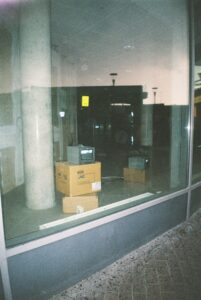
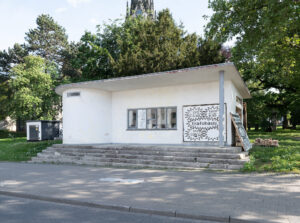
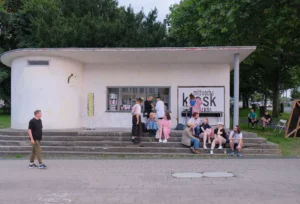
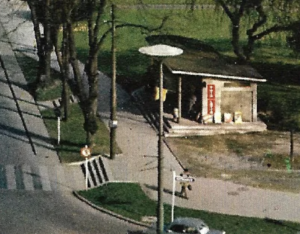
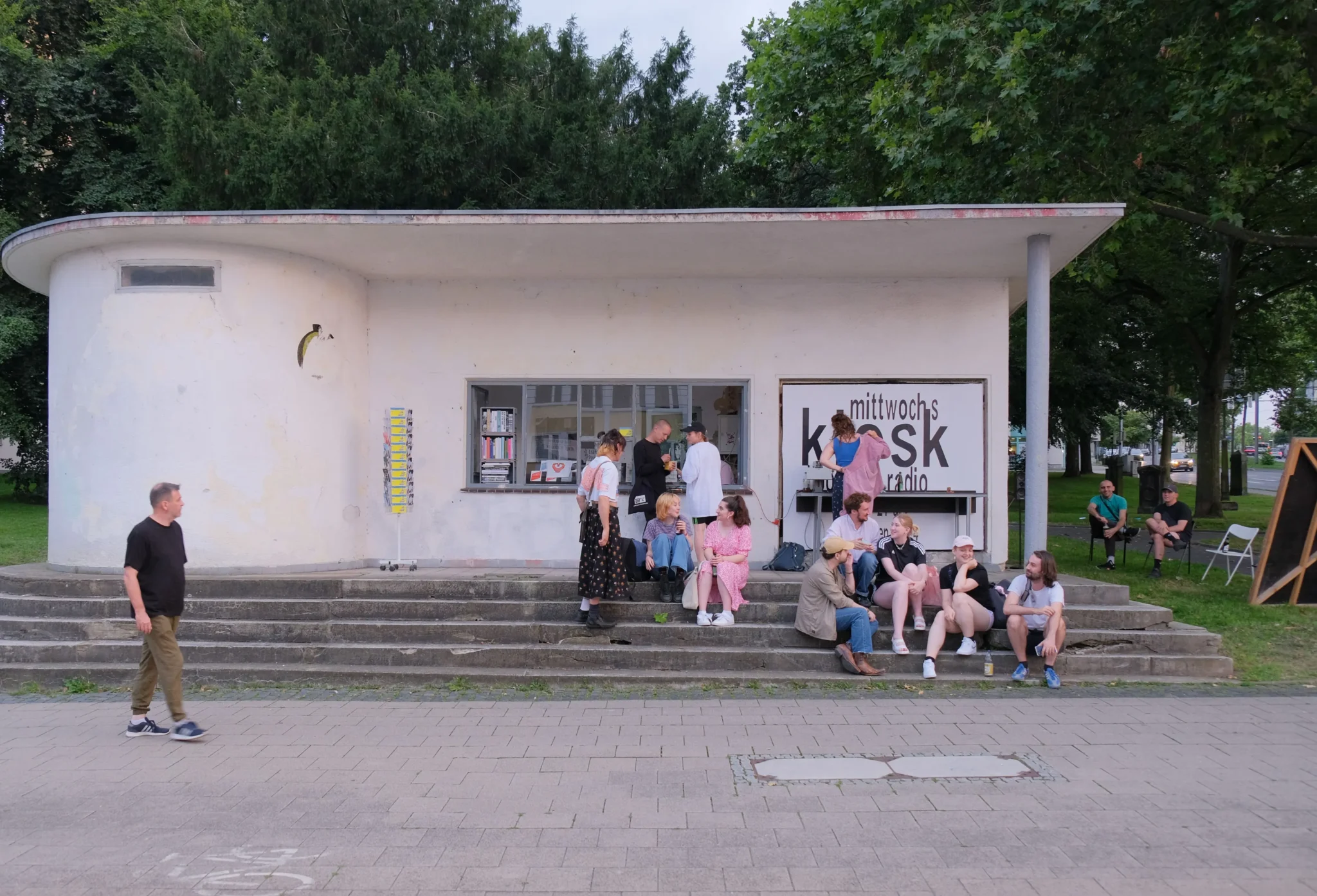
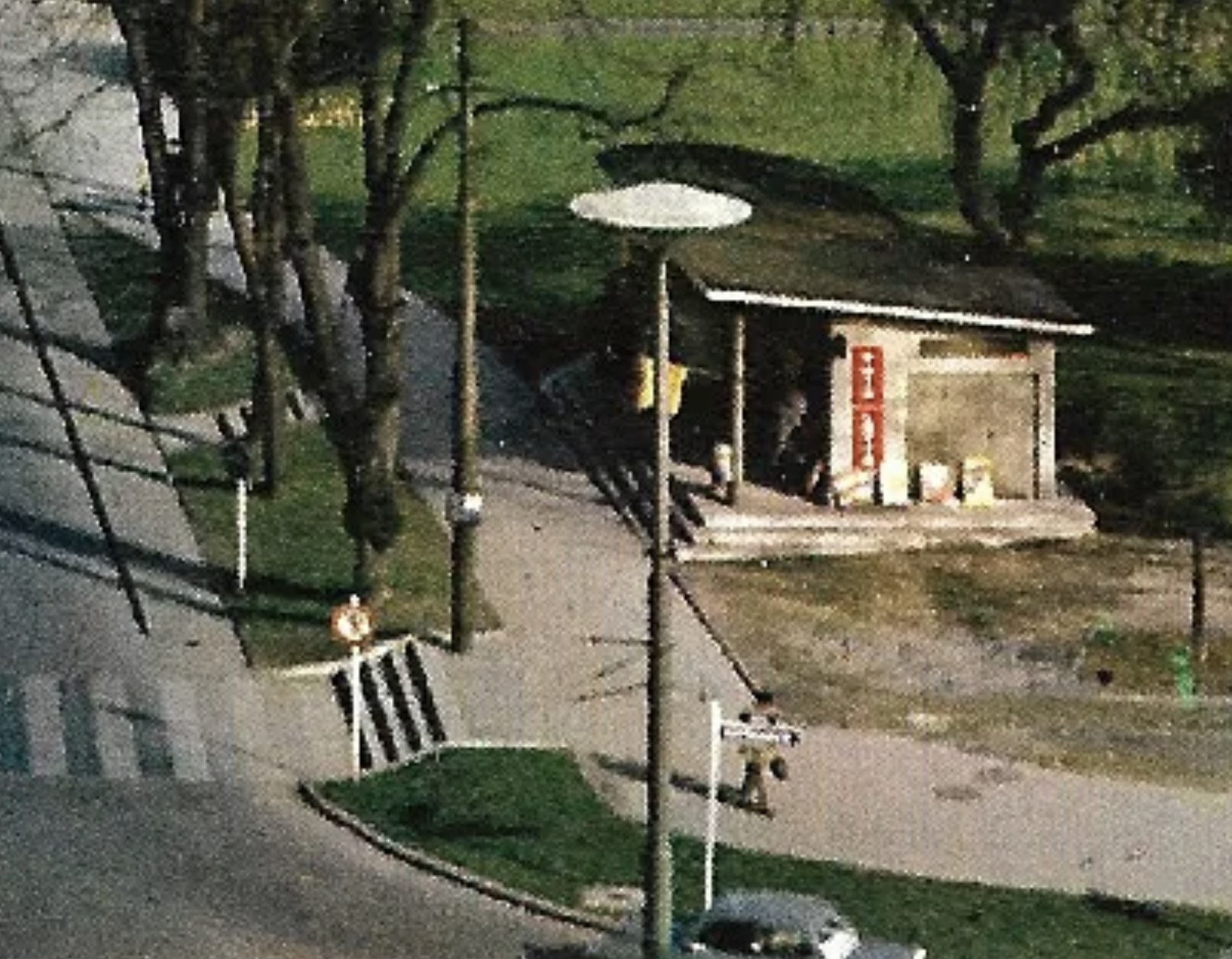
The transformer house in Kassel is a remnant of technical modernism. A building that has lost its primary purpose. On one occasion, it even had to be saved from demolition. However, alongside its original function, the small building has taken on various forms of energy supply over the course of almost seventy years. It is as if it had foreseen that the moment would come when the technology would shrink and find a place next to the building in an inconspicuous compact substation.
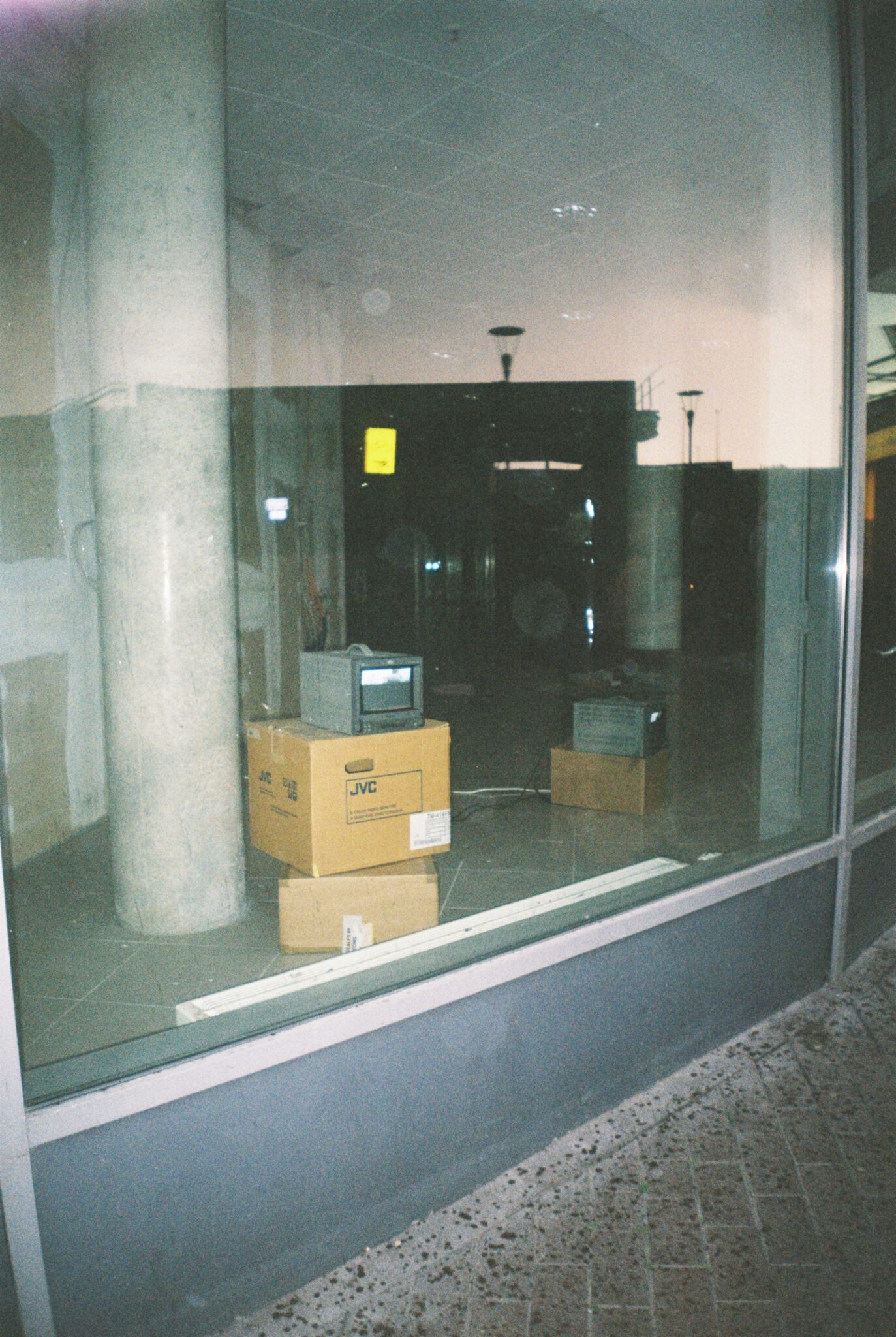
In the tradition of distribution, it points to a remarkable continuity. Situated at a junction on Lutherplatz, between different neighbourhoods, the building serves as a hub. As a transit point, it conveyed not only electricity but also information: at times it was a newsagent’s, then a telephone box, or operated as a post office branch. Today, the Trafohaus continues this logic, albeit under different circumstances. It is a public hub for artistic, creative, architectural and urban-focused content. Today, the Trafohaus is a venue for publication. It is about the dissemination of knowledge, active dialogue and social exchange. The excitement today comes from artists, authors and researchers.
Getting back online
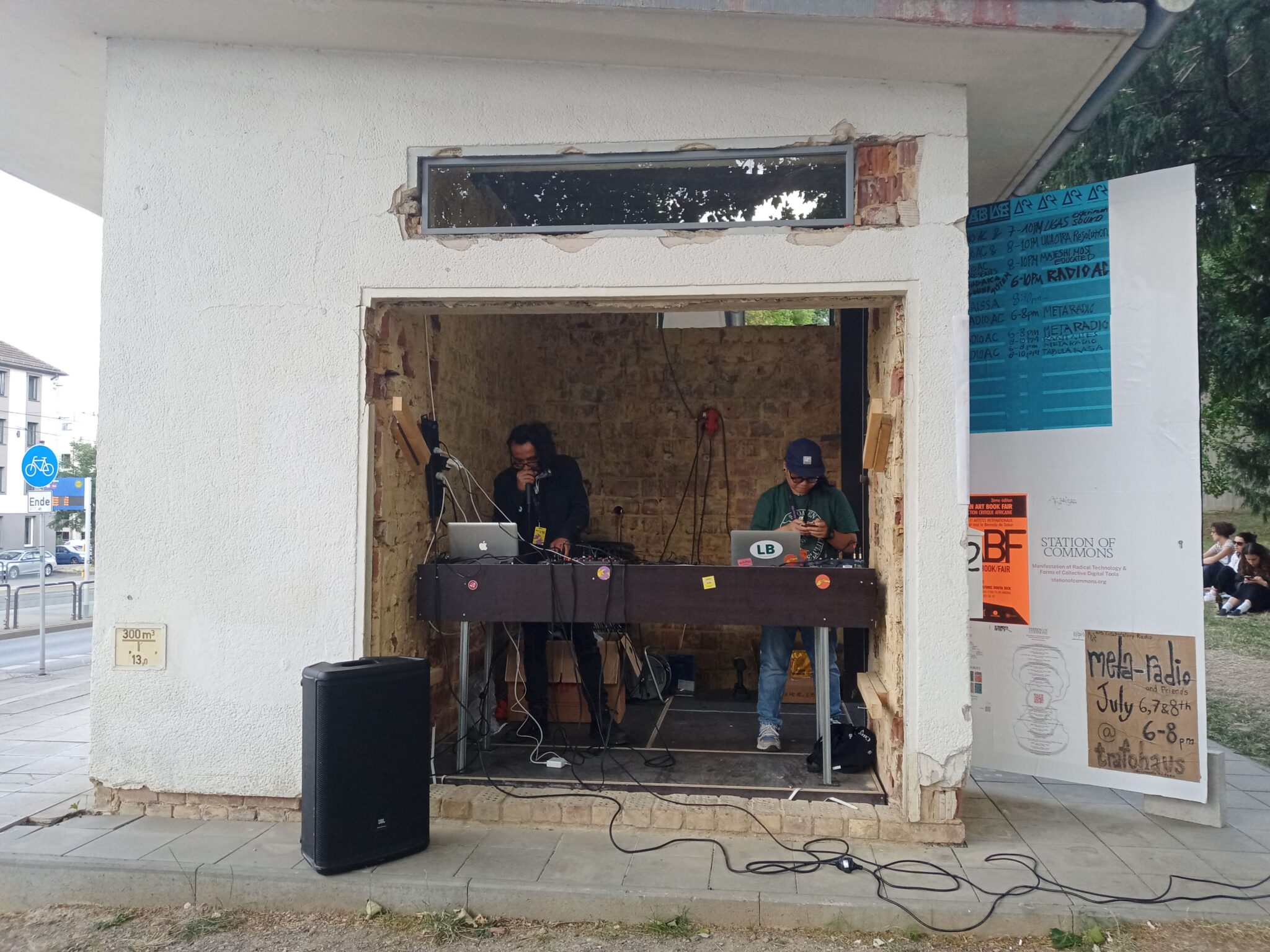
Together with founding member Malene Saalmann, we spend a spring afternoon exploring the building. The Trafohaus was reactivated in 2019 by the Nutzungskonzepte e. V. association and thus reconnected to the grid. We’re sitting on the five steps that half-encircle the building. During the warmer months, events take place here in the outdoor area. The steps serve as both a stage and a grandstand. Behind us is the sales window originally intended for the sales area. There are no records of its actual operation. By 2019 at the latest, however, the kiosk was brought back into use by the association with the installation ‘Profikiosk’ (2019). And most recently as a weekly, regular meeting place as part of the ‘Mittwochskiosk’ (2024). It was advertised via the billboard walls integrated into the building, quite simply: ‘Wednesdays: kiosk books radio’.
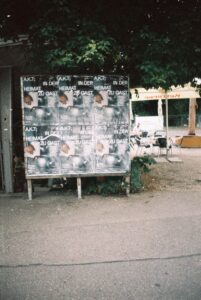
Transformer stations often served as both advertising columns and billboard spaces; this was also the case with the Trafohaus in Kassel. In this way, the building engages with and integrates the outdoor space. The building thus acquires a constantly changing visual façade. The billboard walls can be transformed into a stage set for performances, readings and concerts.
Programme follows form
It goes without saying that the white, free-standing, single-storey building, with its straight surfaces and sweeping curves, has a strong influence on the programme. The Trafohaus continues to function as a transformer. To this end, it has long made use of the medium of radio. Live streaming can be envisaged on a decentralised basis. The radio station enables communication beyond local boundaries. A multilingual programme establishes a supra-regional connection. In episodes such as ‘God’s Word in Your Ear ’ and ‘On the Way to the Amusement Park’ with djfroggy69 & Malene, local stories are frequently placed within public narratives that extend beyond their immediate context.
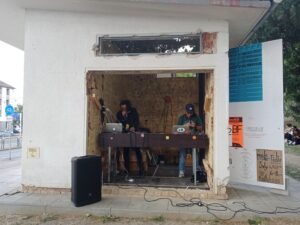
Trafo.Radio broadcasts the ‘Trafo.Radio Listening Session’ on its website on two Wednesdays a month and every Sunday ;this is hosted at Mimikri, a project space designed to bring together Kassel’s music scene. The programme streams DJ sets that deliberately differ from traditional club formats, but there are also lecture performances in which guests present their current research topics. In its role as a social space, the Kiosk, for example, was once the subject of a radio show in collaboration with the University of Kassel. Or the focus might be on Kassel’s music scene of the 1980s. But some things only become clear when you’re there in person, says Malene. So we head to Bettenhausen.
Bettenhausen
After the fall of the Wall, Kassel became the geographical centre of the Federal Republic. That is why there is the Platz der Deutschen Einheit(German Unity Square), via which you reach Bettenhausen. The district seems like an archive of various promises of modernisation. Along the renaturalised River Losse, the village centre clashes with striking, industrial expanses. Here, the history of Kassel unfolds. The Salzmann site, where tents and sailcloth were manufactured, was once the epicentre of the textile industry . For the West German music scene, the place was a key point of reference , partly because of the Stammheim techno club , to which Trafo.Radio dedicated an episode last year. The complex was first used as an external venue for documenta 8 (1987) . Further editions of documenta followed in the industrial ruin.
Travel agency
The next day, we head back to the Trafohaus once more. This is because the Trafohaus was also a venue for documenta fifteen (2022). The global network Arts Collaboratory used the building as an editorial space. Networking, providing a platform for others and enabling participation are at the heart of the Trafohaus’s ethos. For the organisers, it is important to continually engage with the space and research its history further: “Documentation is also part of the Trafohaus’s practice.” That is why the Trafohaus also has a small bookbinding workshop and self-publishes books. They see publishing as a means of exchanging and preserving knowledge. As a self-organised cultural space, they operate using grassroots democratic working processes. This allows them the potential to evolve, remain dynamic and respond to change.
We shake a snow globe containing a miniature view of Wilhelmshöhe, bought from a souvenir shop, whilst we talk about the future of the Trafohaus. Perhaps one day it will become a travel agency.
https://trafo.haus/
- 29.05.2026 Welcome, Kristina Miller!Kuratorische Kontaktzonen
Welcome, Kristina Miller
with Kristina Miller, we are delighted to welcome our first curator to Dialogfelder. Kristina’s work begins precisely where social change becomes visible, tangible and open to discussion: in spaces, milieus, images, routines and ruptures. We are lokking forward that her curatorial residency, Curatorial Contact Zones , will bring a new dimension to the project – an observant, questioning and connecting perspective that precedes the 2027 artist residencies.
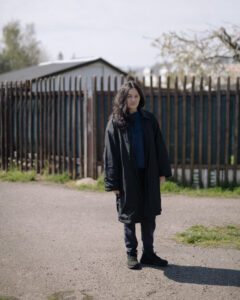
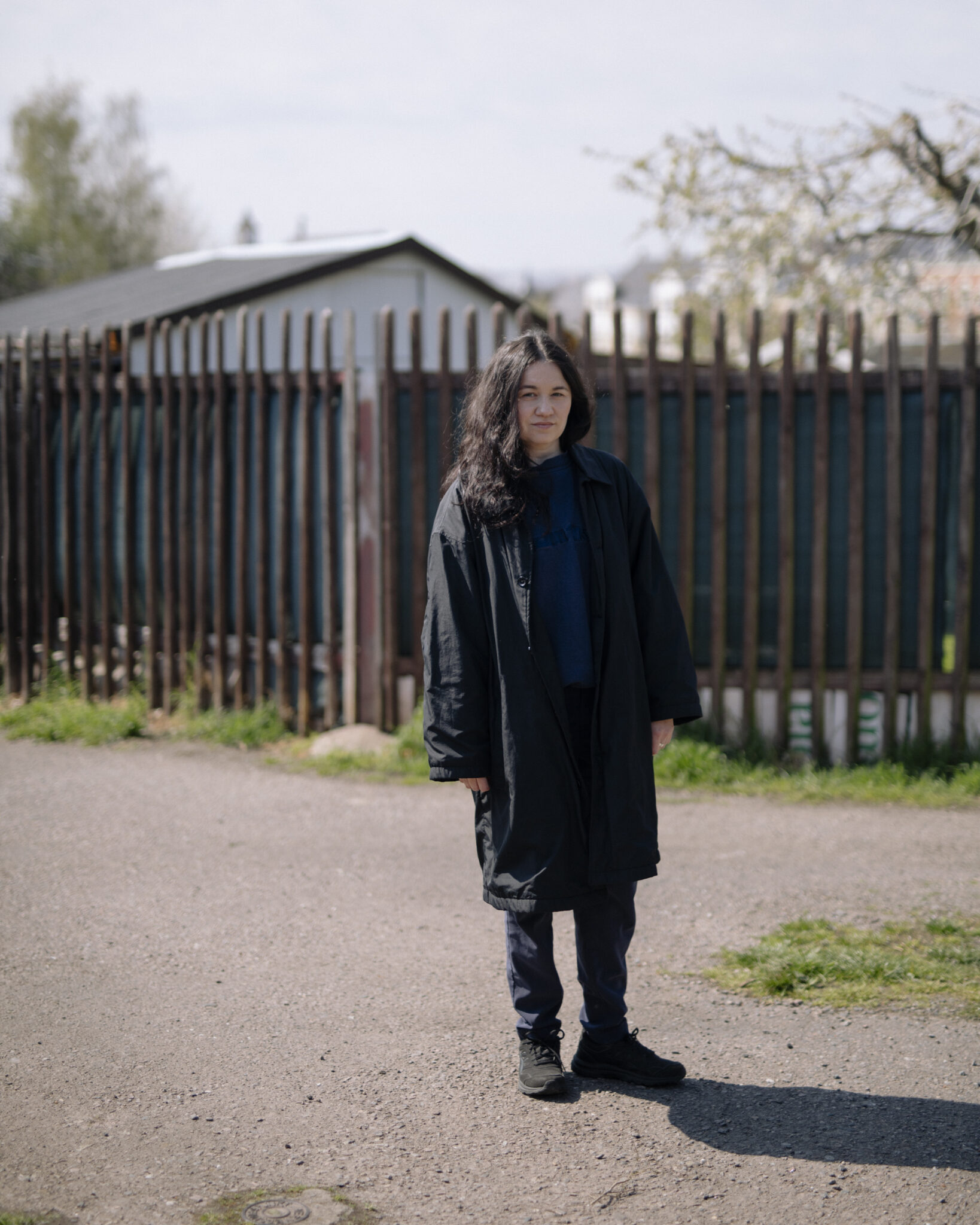
Kristina Miller, born in 1992, lives and works as a curator in Berlin. In her practice, she engages with artistic positions that examine social dynamics, social orders and sociological phenomena. She is particularly interested in closed systems and spaces, decoupled milieus, and places where processes of social negotiation become particularly concentrated and visible.
Drawing on contemporary discourses characterised by radicalisation, the search for identity, uncertainty and resignation, she turns her attention to spaces and movements in which new forms of social reality are emerging. Kristina’s curatorial work combines analytical and academic research, biographical work, field research and the analysis of scene-specific visual languages. Between offline and online cultures, she is interested in the social mechanisms that intertwine analogue and digital realities. Her projects thus navigate the terrain between sociological observation, artistic translation and the question of how spaces shape our coexistence.
As part of the Dialogfelder project, Kristina Miller is visiting eight art spaces in Germany – four in eastern and four in western Germany, in both urban and peripheral regions. Her research explores how art spaces respond to social, spatial and structural processes of transformation, what strategies they develop in dealing with ruptures and change, and how new connections can emerge from this.
Kristina Miller studied sociology at the University of Vienna and Spatial Strategies at the Weißensee Academy of Art in Berlin. For her research work, she has been awarded, among other honours, the Research Grant from the Senate Department for Culture and Social Cohesion, Berlin. In collaboration with cross-media artists, she develops concepts, curatorial formats and texts. As a studio director, she has realised works and exhibitions of international scope, including in collaboration with the ZK/U – Centre for Art and Urbanism Berlin, the mumok – Museum of Modern Art Ludwig Foundation Vienna, documenta Kassel, and the bbk Berlin, and has recently returned from a curatorial fellowship at the Akademie Schloss Solitude.