- 17.07.2026 Second pubertyKuratorische KontaktzonenNot Yet: Utopia in the Making & Kunstverein Ludwigshafen
The Kunstverein Ludwigshafen is the third stop in a research project focusing on a total of eight art spaces, art associations and initiatives in East and West Germany, which precedes the ‘Dialogfelder’ and artistic residencies in 2027.
What these venues have in common is that they operate in communities and regions that are, in various ways, shaped by processes of transformation. The focus is on an exchange of views on how they respond to social, spatial and structural changes, and what strategies they develop to address them.
If one is literally searching for a city that does not yet exist, then one is searching for a possibility. One person who was on the lookout for this possibility in the late 1960s was a Cologne-based entrepreneur seeking to transform his private art collection into a public institution. The criteria for the project, however, were rather idiosyncratic: the location was not to have any connection to established art scenes in West Germany; it was to be industrial and thus characterised by its working-class population, yet at the same time welcoming to both medieval and modern works of art. The Wilhelm Hack Museum was to serve as a ‘cultural catalyst’.
Ludwigshafen was supposedly the ideal location for this and, moreover, a fitting choice in terms of its character: a young industrial city characterised by concrete, post-war reconstruction and shift work. However, some members of the public found it provocative that their city had been chosen for the new museum building. Municipal spending on abstract art in an industrial city was perceived as provocative and rejected. For decades, Hack struggled with the location he himself had chosen. The conflict centred less on the art itself than on the question of who needs and finances public culture.In the summer of 2026, the Kunstverein Ludwigshafen is posing similar questions. As part of its annual programme and in collaboration with the New York-based artist Noah Fischer, the organisation is addressing the city’s community. An advertising column asks: ‘What should this city be an example of?’ A city that would probably never have come into being in its present form without the chemical industry, and which today ranks among Germany’s most heavily indebted local authorities.
For the Kunstverein, talking about Ludwigshafen means taking to the public space. From May to September, a trail will be created, giving rise to a discourse with various stops across the city that opens up different perspectives on Ludwigshafen. At the same time, however, the project is also a search for identity. Ameli Klein, director of the Kunstverein, speaks of the city undergoing a second adolescence.
In Ludwigshafen, the ‘not-yet’ and that which is only just taking shape are less an exception than a recurring state of affairs. Time and again, and even now, the city finds itself confronted with the consequences of various processes of structural change. For the philosopher Ernst Bloch, who was born in the city, transformation meant turning hidden and dreamt-of possibilities into social reality. Change is inherent in the material world, and utopias arise from what already exists. The Kunstverein’s programme ‘Noch Nicht: Utopia in the Making ’ takes up Bloch’s open concept of the future and examines how change manifests itself; what, specifically, is changing.
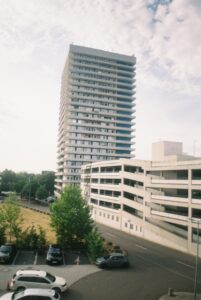
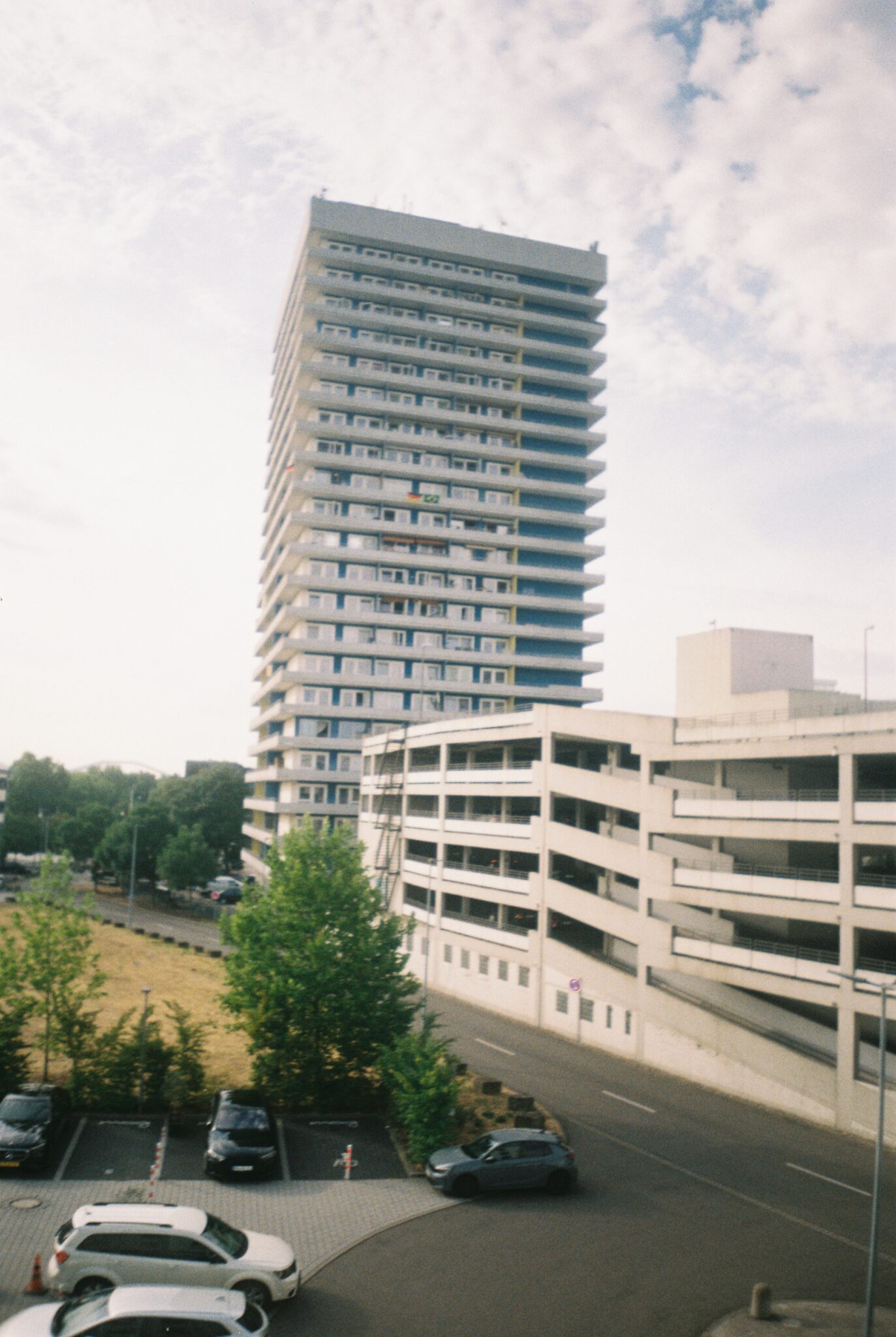
On Thursday evenings, at the ‘In Bewegung’opening , one gets a good sense of the city’s momentum. Ludwigshafen stands as a testament to post-war modernism, which finds its architectural expression in austere, minimalist façades. With its clean lines, the city exudes a sense of serenity. It is rugged, and its uncompromising functionality bears witness to a belief in social progress. Ludwigshafen’s cityscape is modernism’s honest response to the challenges of its time.
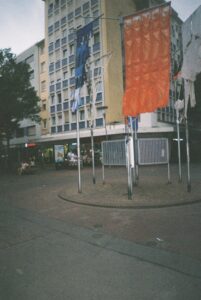
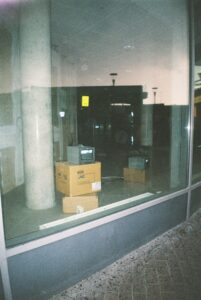
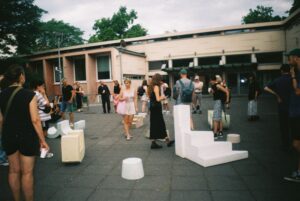
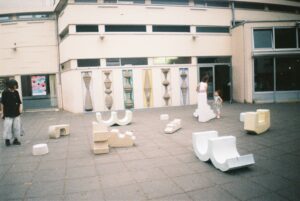
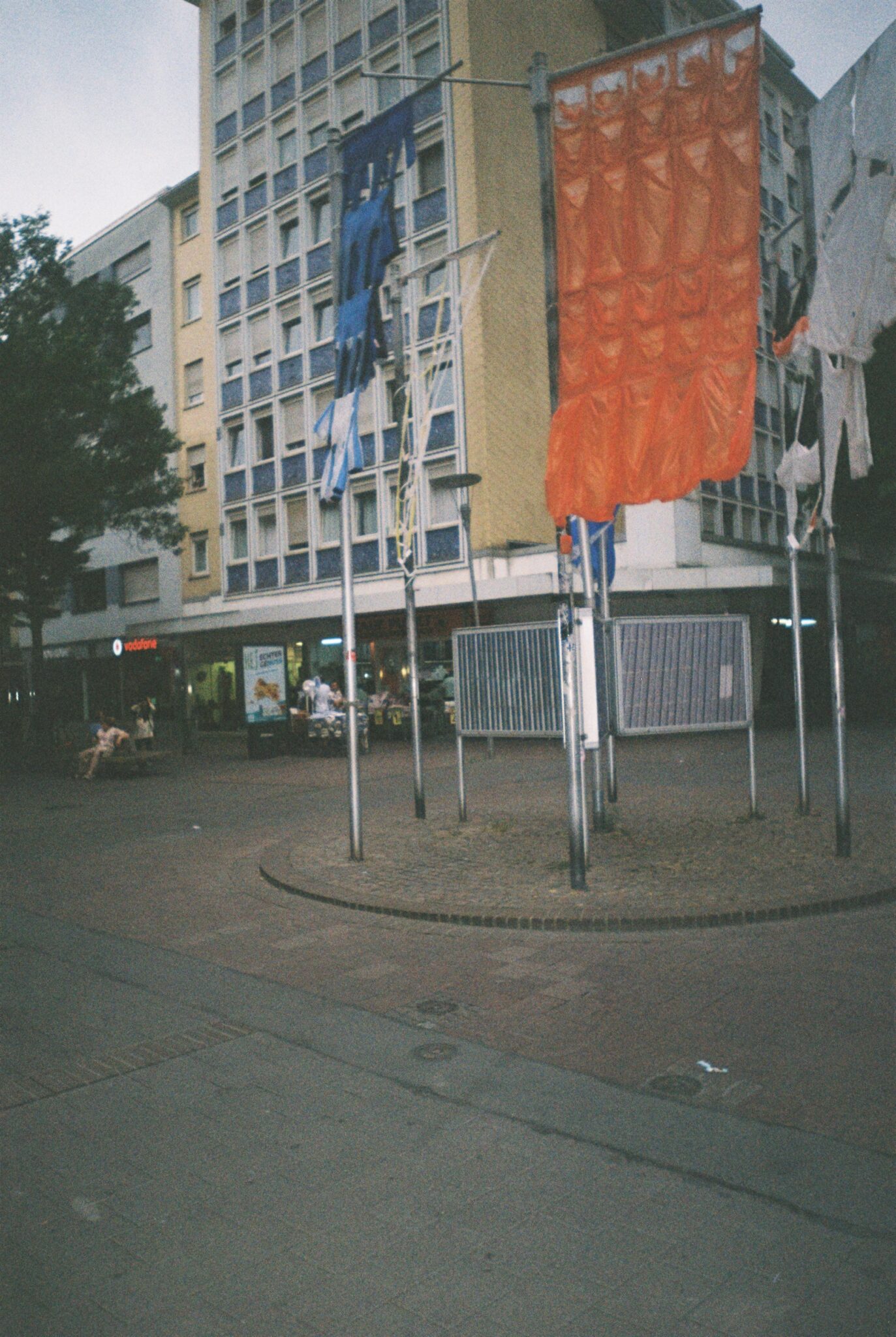
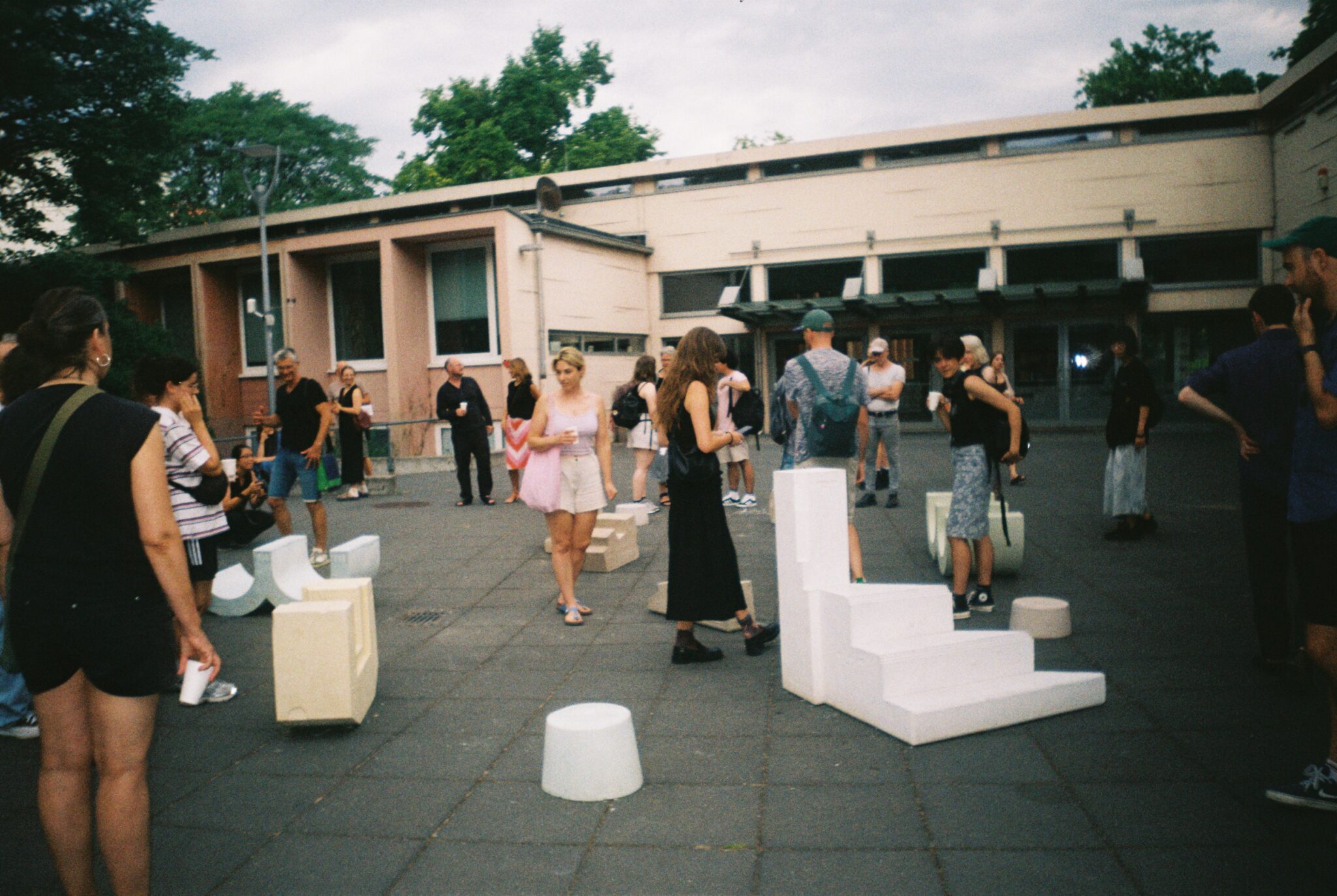
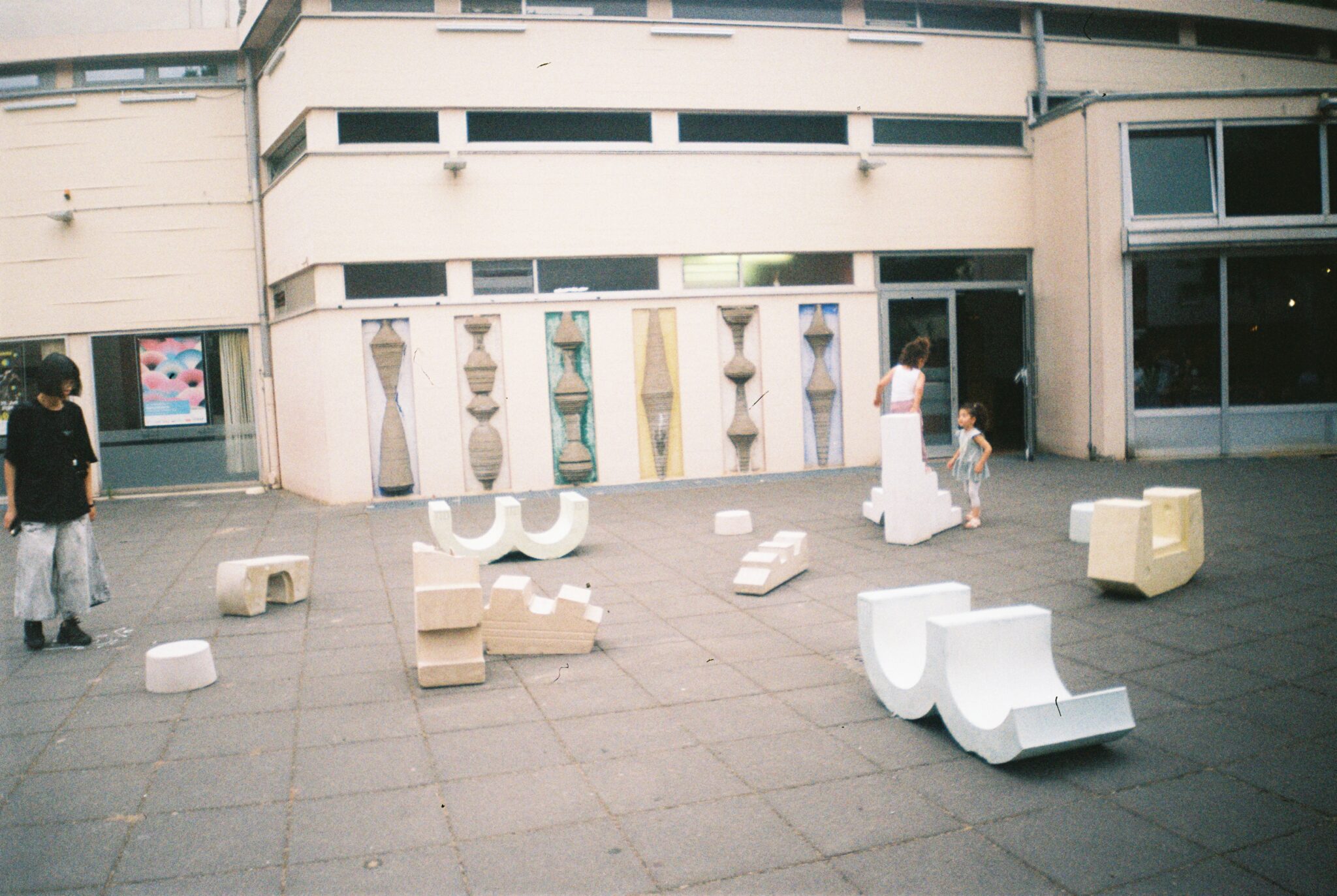
The American artist Katarina Burin explores this promise of the future – and what remains of it. In public spaces, she examines the relics of post-war architecture and asks what modernism means when it no longer feels modern. To this end, she has transformed façade elements and characteristics of buildings in the city centre into standalone sculptures. A site-specific installation was created on the forecourt of a cultural centre on Bahnhofstraße. The route then continues into a typical German shopping street, with its characteristic vacant premises. Flags on the flagpoles along Bismarckstraße reflect the façades opposite. Katinka Eichhorn takes up the architecture of her surroundings and mirrors it in a textile work. In the shop windows of a former fashion chain, Emmélie Lempert and Haru Apa Nyx display visual objects that address the female body in public space. They explore questions of visibility: who determines the gaze, and what power dynamics are inscribed in public images of bodies?
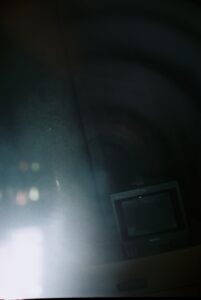
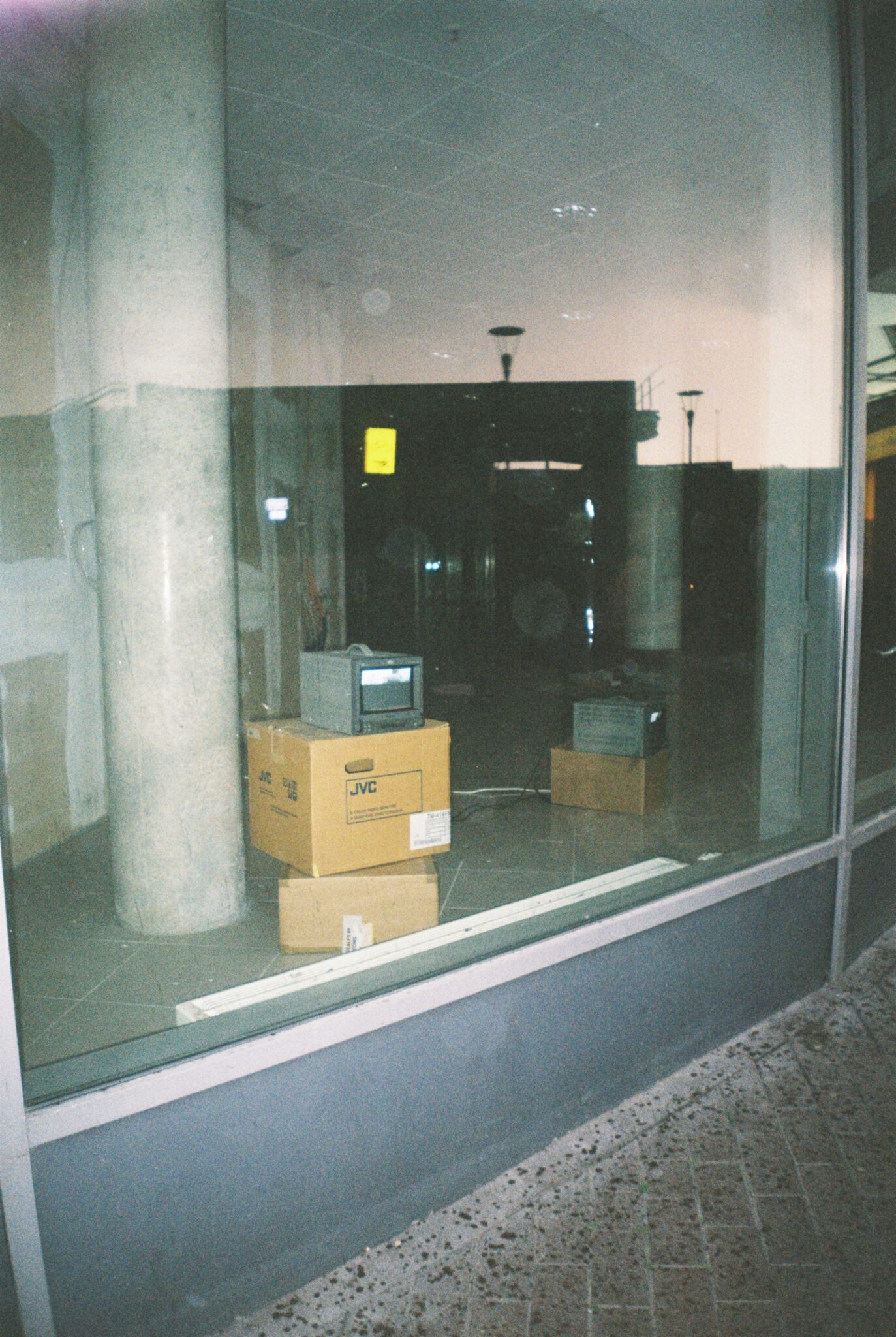
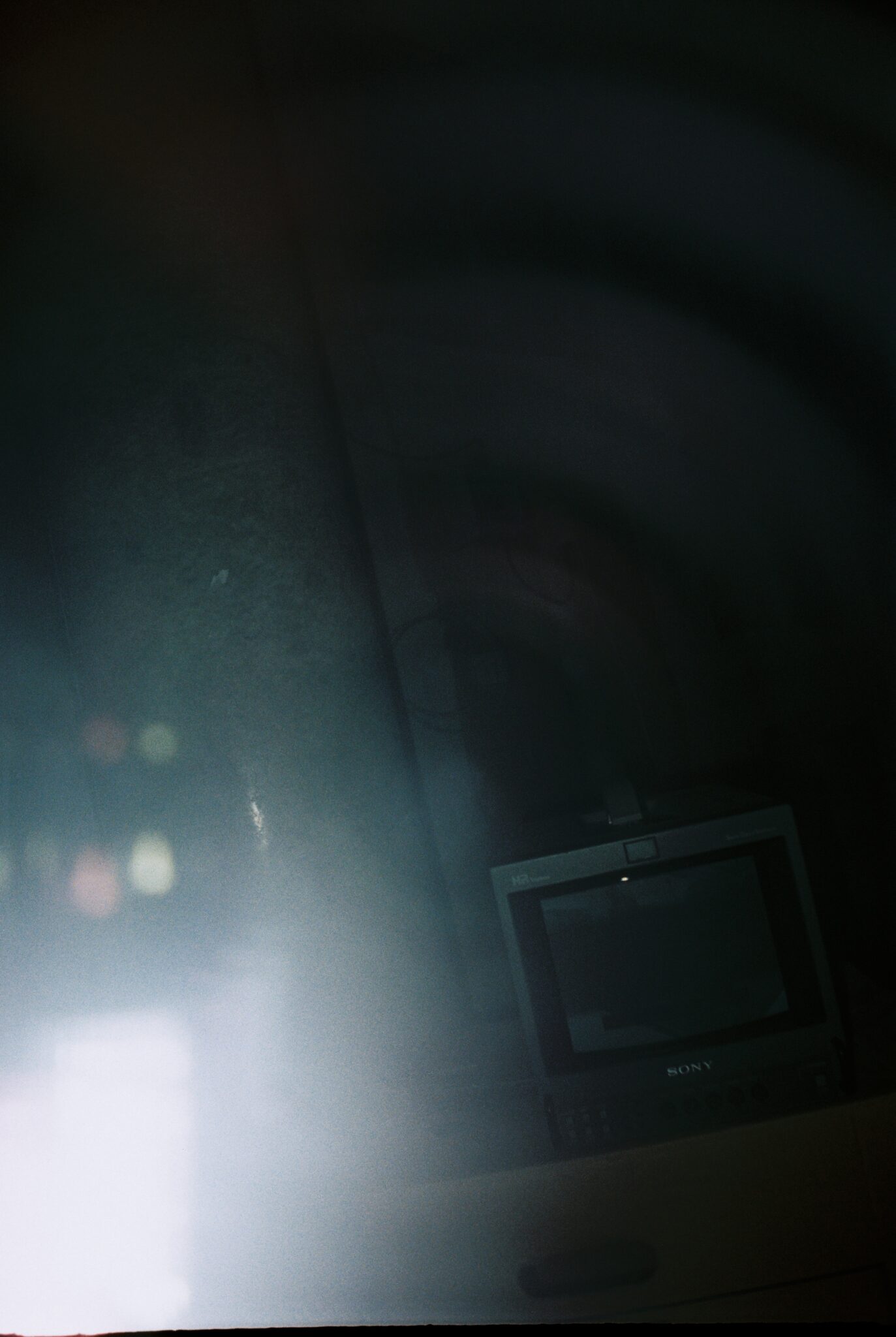
The gaze upon the body in public space is always also a gaze upon the structures that produce and regulate it. Coco Fusco’s video installation takes this connection between visibility and control one shop window further by making the perspective of the control system itself the subject of the work. In *Dolores from 10 to 10*, Fusco uses surveillance footage to reconstruct the case of a Mexican maquiladora worker who was locked up for twelve hours after attempting to form a trade union. In another video work , *Utopia, The Place That Doesn’t Exist*, Driton Selmani responds to the political reorganisation of Kosovo following the 2008 declaration of independence. A seemingly simple act in a public space in Pristina becomes the starting point for a reflection on borders, belonging and the contradictory idea of a national utopia.
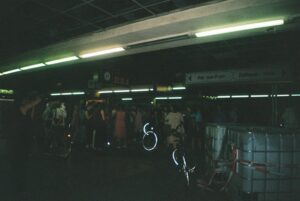
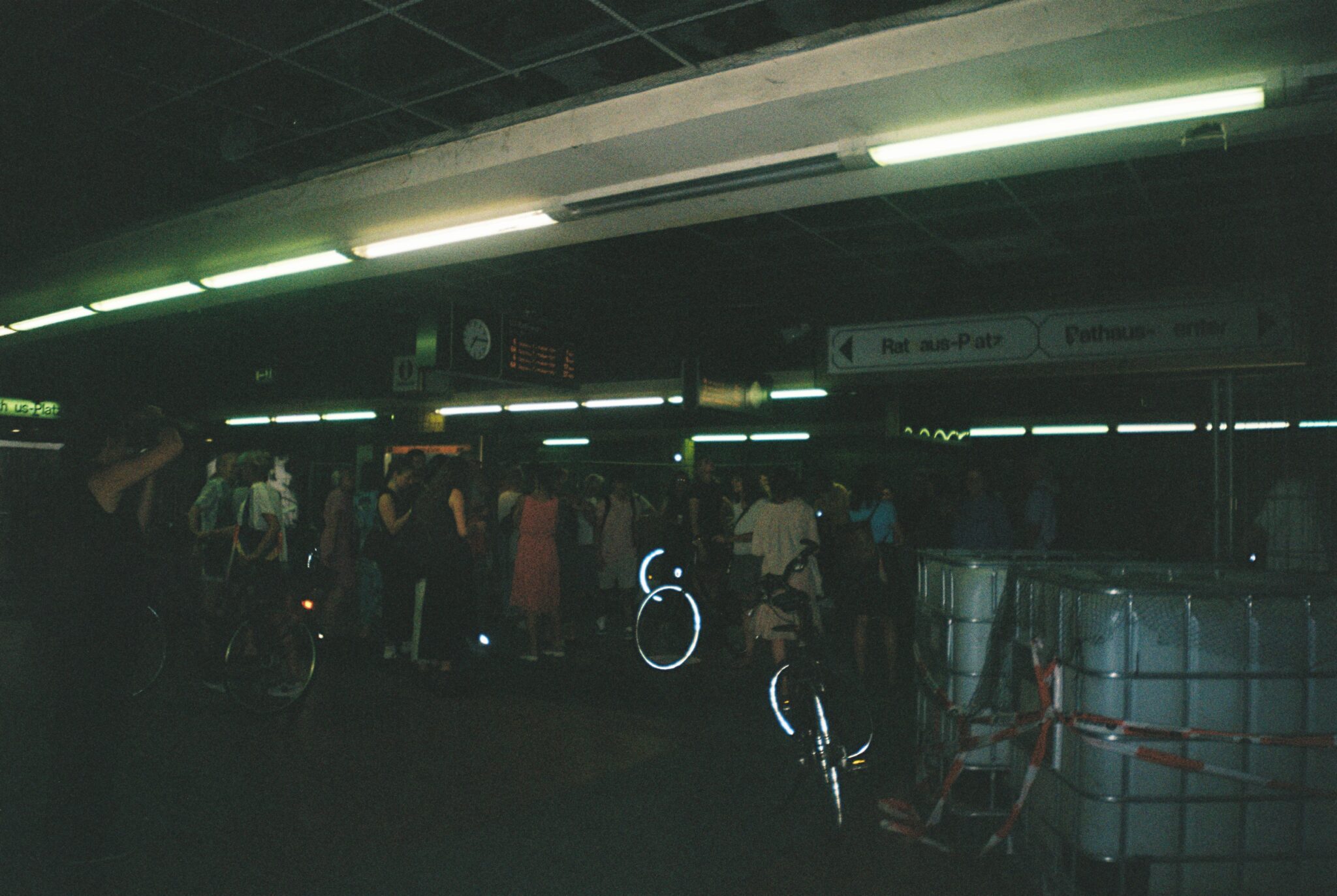
Just a few metres further on, in the utopian-dystopian-looking entrance area of a tram stop, Gabriela Pelczarska’s sound installation can be heard. She creates a sonic space from distorted engine noises. Through her work, she also alludes to the forthcoming redevelopment of the street space above ground: the old town hall and the Rathaus-Center once stood above the stop, but have since been demolished.
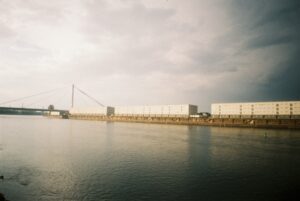
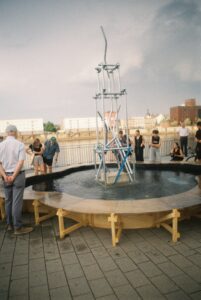
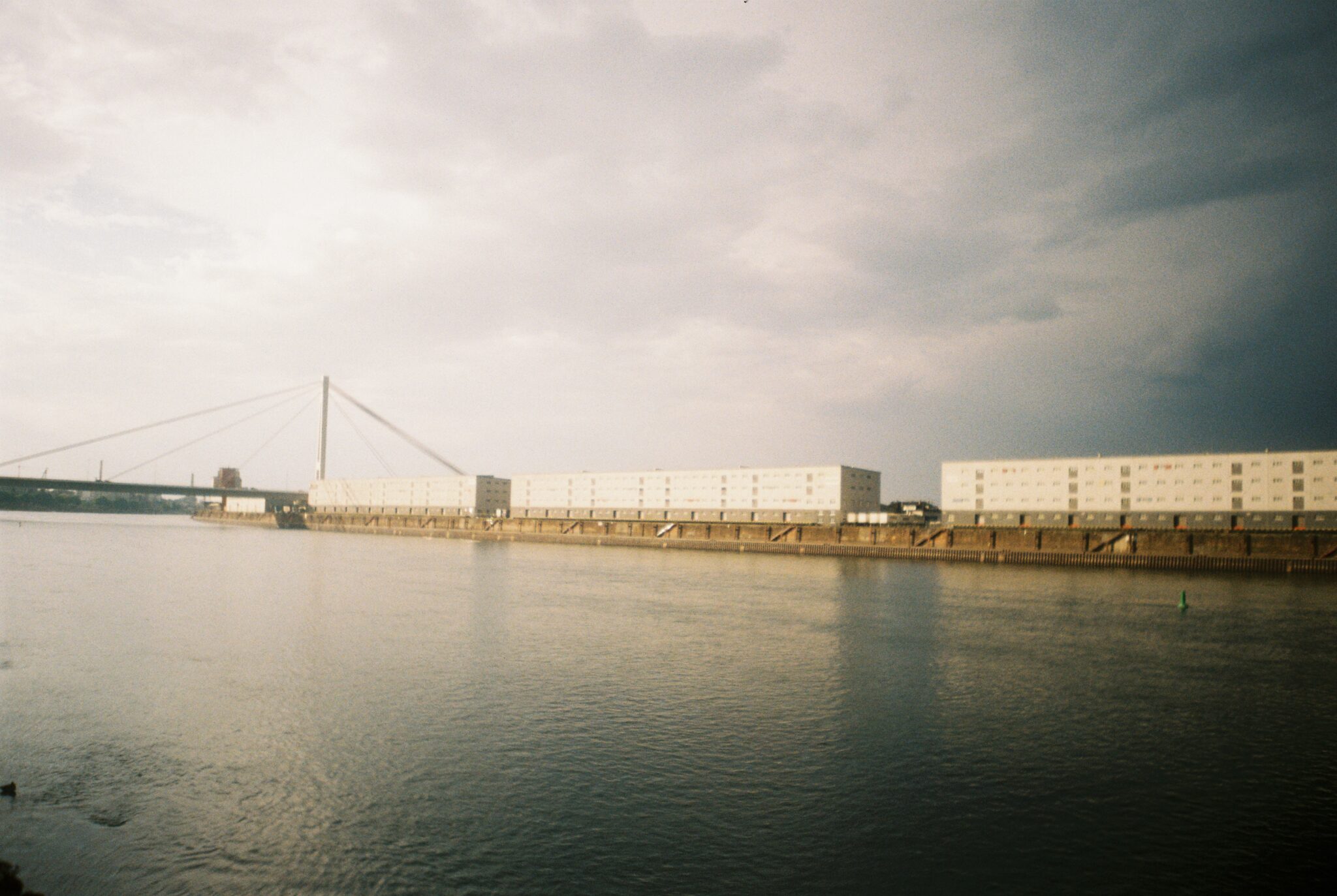
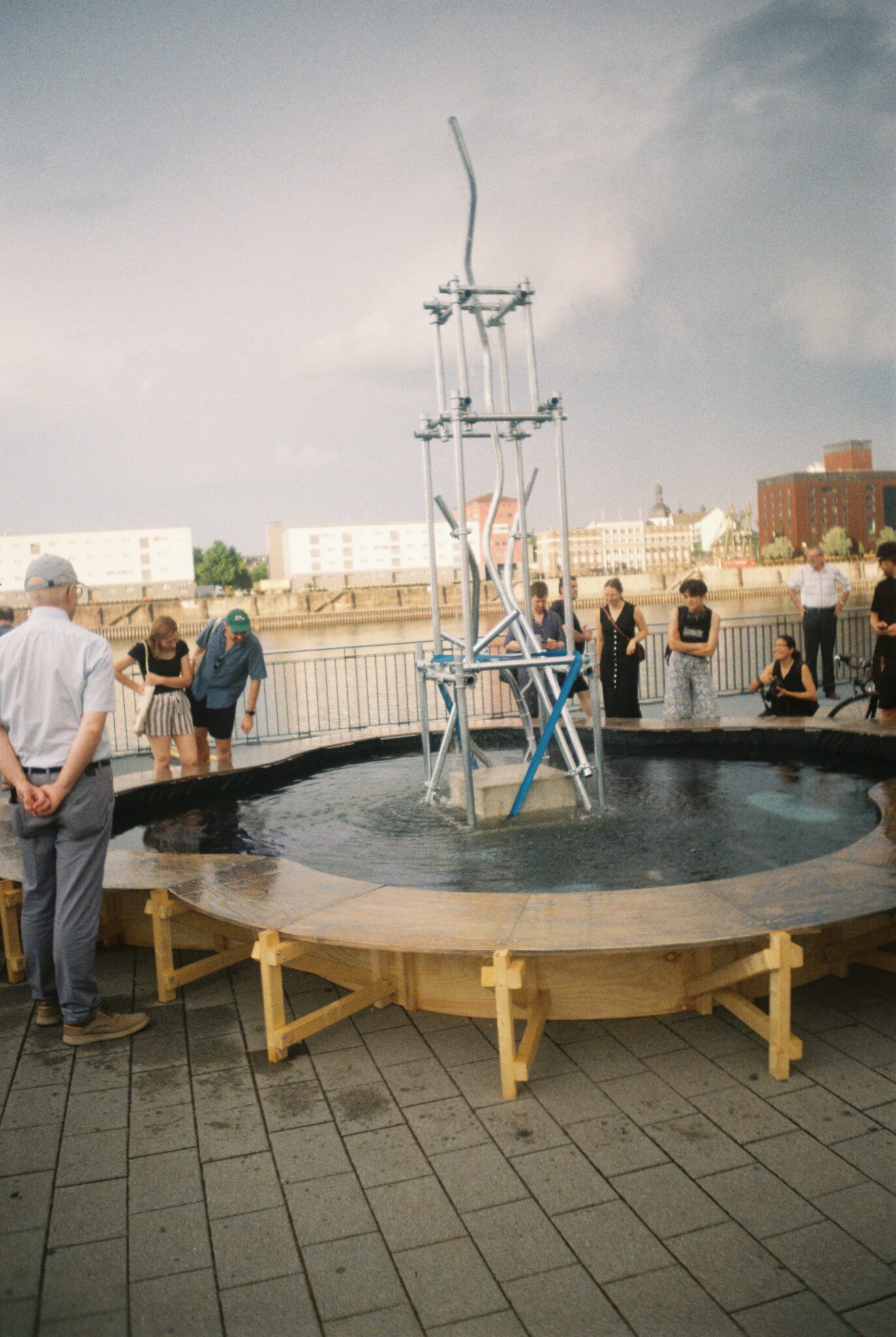
Ludwigshafen appears as a city in a constant process of negotiation, one that is continually readjusting itself. Changes do not follow clear-cut patterns, but arise from the superimposition of different layers of time, interests and urban planning visions. The discourse on necessities and the use of resources leads to the fourth stop on the exhibition tour: the Rhine promenade, where Raul Walch’s ‘Blochbrunnen’is situated . This temporary installation takes up the floor plan of the former Ludwigsbrunnen and translates it into a sculptural intervention. In a location where the surfaces are almost entirely sealed and the Rhine is noticeably low on hot 40-degree summer days, the work draws attention to the circulation and availability of water. The floor of the fountain is inscribed with multilingual word fragments and quotations from Ernst Bloch’s *The Principle of Hope *.
Perhaps it is precisely in the principle of confidence that the relevance of the ‘not-yet’ lies: those seeking possibilities must seek out places where the present points beyond itself and reveals its as yet untapped directions. Seeking out the venues where social processes of negotiation take place stems from the conviction that public life and participation do not arise solely within institutions, but rather where different realities of life converge and change is already taking shape.
The fact that the Kunstverein Ludwigshafen has chosen this path is not merely a curatorial principle, but also stems from a transitional situation: the Ludwig-Reichert-Haus, its usual venue, is currently undergoing renovation.
https://www.kunstverein-ludwigshafen.de/